This article was written by Melinda Liu.
Elon Musk. A familiar name to many, it evokes a range of companies, positions, and industries. The South African-born entrepreneur is the current richest man in the world, with a net worth of $383 billion. Beyond that, however, he is also deeply entangled in US and global politics.
To understand Musk’s political involvement, it is essential to examine the movements and individuals he has expressed support for, both online and in person. At the forefront is President Trump, particularly during the 2024 election, but the issue extends beyond that. Musk “has encouraged right-wing political movements, policies and administrations in at least 18 countries in a global push to slash immigration and curtail regulation of business,” as expressed in a review of his political activity over the past two years.
He has supported right-wing street demonstrations in Brazil and Ireland, met in person with leaders of right-wing movements in Argentina and Italy, and his social media platform X (formerly Twitter) has followed censorship requests from the right-wing leaders of India and Turkey. Rodrigo Campos, a researcher in politics at the University of York in the United Kingdom, summarizes these events as “Musk [succeeding] in branding himself as a kind of global spokesperson of the far right.”
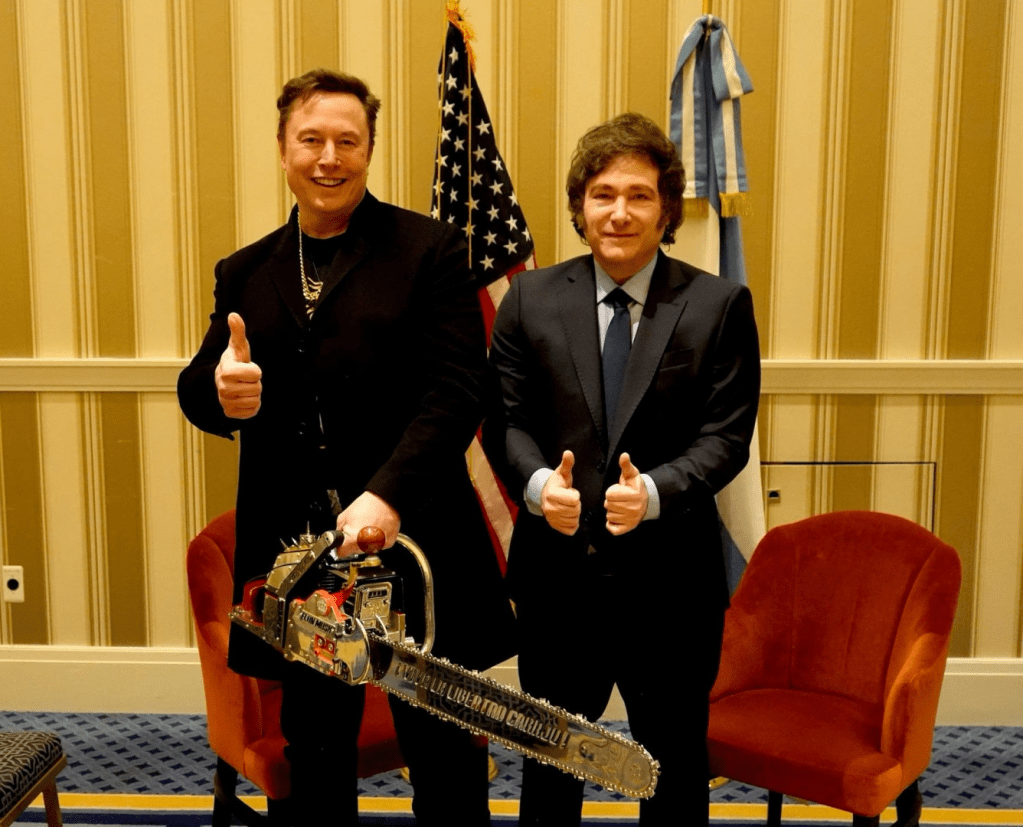
Elon Musk, left, with Argentine president and far-right libertarian Javier Milei. Musk has been a prominent supporter of right-wing movements worldwide. Source
Musk is a figure who elicits a range of responses in American politics. His influence is a topic of debate among various groups and individuals, including the AAPI community, highlighting the diversity of opinions about his impact.
AAPI adults have mostly been opposed to Elon Musk’s DOGE (Department of Government Efficiency) and the actions it has taken. According to AAPI Data, “3 in 4 AAPI adults [say that] Musk has too much influence on the federal government.” Likewise, they strongly oppose DOGE proposals that seek to eliminate programs such as USAID and the Department of Education. Two-thirds of AAPI adults also do not support rolling back programs and initiatives that focus on serving minority communities.
In March of 2025, a group of organizations, including the Japanese American Citizens League and OCA–Asian Pacific American Advocates, filed a lawsuit against Elon Musk and DOGE for “allegedly overstepping their authority by cutting federal spending, terminating employees, and dismantling government agencies.” Along with the Sierra Club and the Union of Concerned Scientists, the groups suing are “described as nonprofit membership organizations dedicated to various aspects of American well-being.”
The Japanese American Citizens League has voiced concerns about the potential impact of DOGE’s cuts. They fear that reductions to the National Park Service could affect historic sites of Japanese-American incarceration, and that cuts to the Department of Education could limit their members’ access to programs and opportunities.
Meanwhile, OCA–Asian Pacific American Advocates cited similar concerns about potential harm from cuts to educational opportunities. After being consolidated with another court case against Musk and DOGE, this case is still ongoing.
However, there are also positive sides to the Asian-American community’s relationship with Musk, including members of the community who wish to work or are working closely with him. Andrew Yang, a Taiwanese-American and 2020 Democratic Presidential candidate, who is now the leader of his independent Forward Party, told POLITICO that he had reached out to Musk about working with him in the Forward Party or creating a new party altogether. This was following Musk’s prominent feud with President Trump, which resulted in Musk asking X users whether or not they wanted a new political party (ending with a result of 80.4% in agreement out of over five and a half million votes). According to reports, Yang has not yet heard back from Musk.
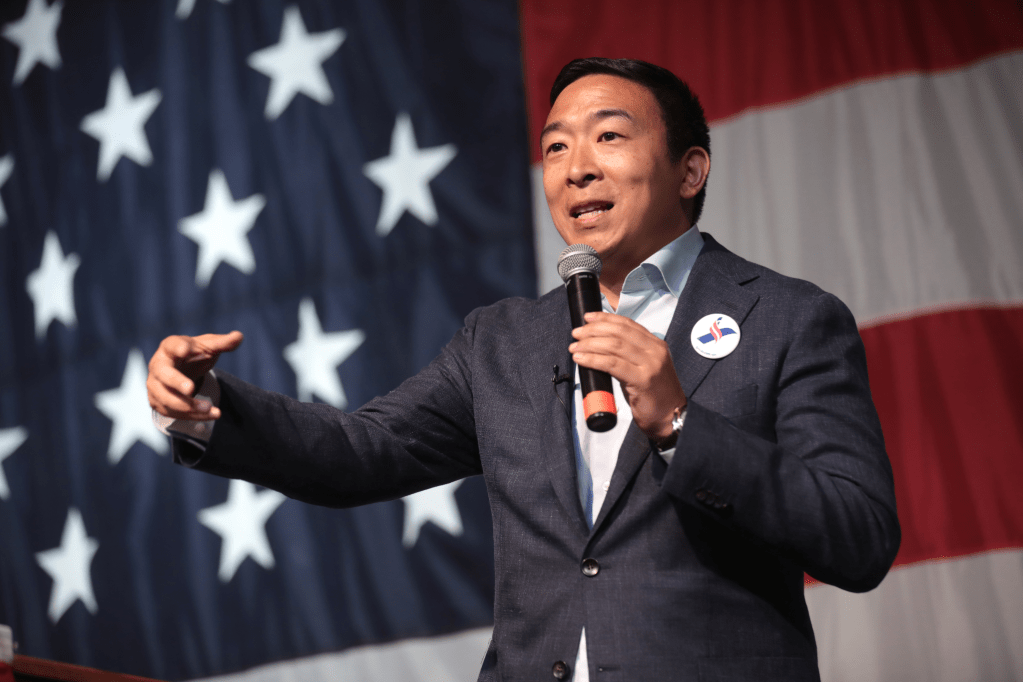
Taiwanese-American politician Andrew Yang, center. A 2020 Democratic presidential candidate, Yang’s Forward Party aims to create a viable centrist party. Source: Gage Skidmore
Others have worked even more closely with Musk, to much controversy. Ethan Shaotran, a 22-year-old Asian-American Harvard computer science student and OpenAI-backed startup, is now one of the youngest engineers working with Elon Musk to revamp federal technology. He “caught attention from Musk’s xAI artificial intelligence company in October, when his team was a runner-up in the firm’s hack-a-thon.”
Shaotran and another young engineer working with DOGE have “administrator-level status in the [Department of Education’s] email system, allowing them to potentially access sensitive information,” with Shaotran reportedly “[having] accessed the back end of the ed.gov website.” Watchdog group Public Citizen sued the Department of Education in an attempt to block DOGE staff from accessing potentially sensitive information. The lawsuit states, “The scale of the intrusion into individuals’ privacy is enormous and unprecedented. The personal data of over 42 million people lives in these systems.”
In conclusion, Elon Musk remains a controversial and pivotal figure in American politics, first working closely with President Trump and then publicly feuding with him. With this public spotlight comes association with many groups and communities, including Asian Americans. Many have expressed concern about Musk and DOGE’s actions, while others seek to work with him, and others still are affected by Musk’s public words and proposed budget cuts.
 The AAPI Angle

Leave a comment