This article was written by Melinda Liu.
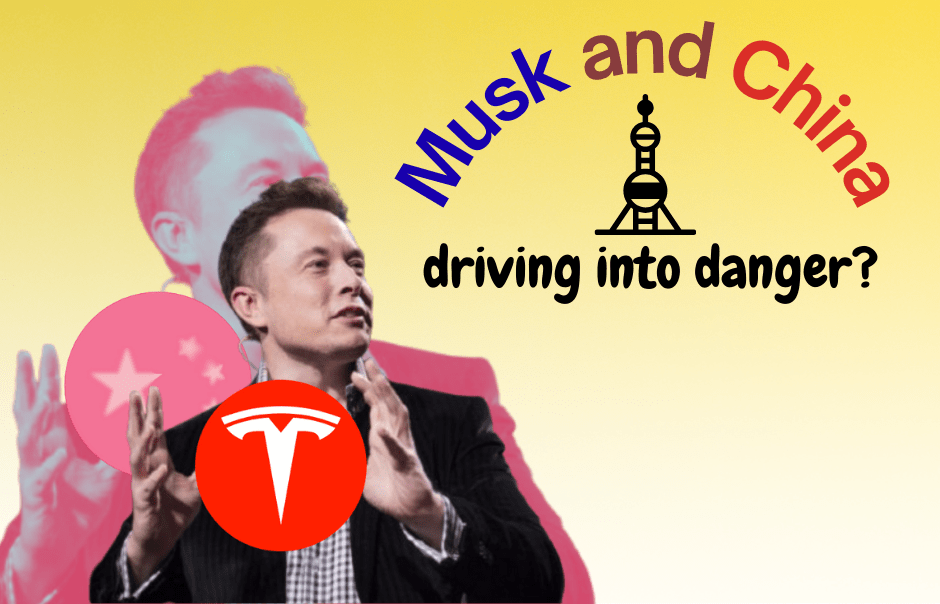
Elon Musk — richest man in the world and face of several different companies — has a complex and unique relationship with China. Chinese citizens have repeatedly expressed positive views of him and Tesla, which makes up a great deal of his wealth, depends on the Chinese market for its success. Additionally, his well-known ties to and dependencies on China have drawn scrutiny and skepticism back home. Today, this relationship will be better explored, explained, and contextualized.
While attitudes towards Musk in the United States have soured, Chinese citizens have made clear their support. As of July 2025, “posts with the hashtag ‘#Musk wants to establish the American Party’ had garnered more than 68 million views on Weibo, China’s X-like social platform.” Many Chinese citizens online have closely followed the feud between Musk and Trump and expressed their opinions as the “spectacle” culminated in Musk forming his own political party, with many “[voicing] admiration for Musk, who has long been celebrated in China for his pioneering influence in science and technology.”
“Comrade Musk! If the Americans want to leave you without a country, then just become a citizen of our great China,” one user reportedly wrote.
“Brother Musk, you’ve got over a billion people on our side backing you,” another user wrote, summarizing the general mood on the platform.
Following the same feud with Trump, some have speculated that Musk may attempt to move his tech empire and many companies to China. “There is a possibility that Musk might move more R&D or manufacturing capabilities abroad,” Denis Simon, a fellow at US-based think tank the Quincy Institute for Responsible Statecraft states.
Disregarding Chinese citizens’ positive views of Musk, China also has “advanced supply chains and infrastructure,” making it a prime location for Musk to relocate, should his and Trump’s tensions continue to spike, most importantly over issues like regulation or taxes.
However, Musk and his economics may already be more deeply dependent on China than many realize. Musk’s electric vehicle company, Tesla, opened a second facility in Shanghai in March of 2025. Nearby, another factory, Gigafactory (as all Tesla factories are dubbed) “produces 1 out of every 2 Teslas in the world, or about 1 million cars a year.”
Teslas have helped China create an electric vehicle industry that is one of the world’s best, while China has in turn created a massive market for Musk’s cars. “China is absolutely central to the success story of Tesla globally,” says Michael Dunne, the chief executive of a San Diego-based advisory agency. “Take China out of the picture, we have a completely different Tesla.”
Musk clearly has business interests in China, and much of his wealth is connected to Tesla sales and stocks. The Hill states that, “Tesla’s presence in China is a privilege, not a right; the moment Musk falls out of favor with Beijing, it can all be taken away.”
Tesla is not the only economic stake Musk has in China. “Wealthy Chinese investors have been quietly pouring tens of millions into these firms,” using special legal structures and vehicles to conceal their identities. In addition, “three China-backed asset managers admitted to selling over $30 million worth of shares in SpaceX, xAI, and Neuralink to anonymous investors.” China’s private industries and companies are deeply tied to state interests and politics. High level companies in China are subject to Beijing’s influence, including foreign ones with a significant presence such as Tesla.
This is not the sole concern critics have had with Musk’s China ties. He has praised controversial Chinese political moves frequently, in addition to having met with multiple high-level Chinese officials. Chinese Premier Li Qiang presented Musk with a Chinese green card personally at one of Tesla’s previously mentioned factories in Shanghai. Musk has also met Chinese President Xi Jinping directly at an exclusive 2023 dinner in San Francisco. Vladimir Putin has reportedly told Musk not to allow Starlink internet access on Taiwan as a favor to China, resulting in SpaceX telling its Taiwanese suppliers to move abroad.
The Prospect summarizes these concerns, stating, “The government is supposed to be accountable to the people, not the personal plaything of one ultra-billionaire and whatever dictators might be able to twist his arm.”
Tesla has also taken out loans from China’s state banks to construct its Gigafactory in Shanghai, borrowing $1.4 billion. This factory is also “subject to Beijing’s stringent information-sharing laws.” Following the Wall Street Journal’s reports of communication between Putin and Musk since 2022, two Democrat senators demanded an investigation into SpaceX and possible ties to China and Russia through government contracts. “The last thing the United States needs is for China to potentially have an easier way of obtaining classified intelligence and national security information,” former general Russel Honoré states.
Elon Musk clearly has ties to China, including economics interests that make him susceptible to Chinese control, which many have expressed national security-related concerns about. In addition, he has the support of Chinese citizens on social media. He has also met with high-level Chinese leaders and previously complied with their demands, as well as working with Chinese federal banks.
Whether or not concerns about the threat Musk may pose to U.S. national security are warranted remains to be seen.
 The AAPI Angle
Leave a comment