This article was written by Melinda Liu.
In a groundbreaking move that signals a new era for data science in China, renowned mathematician Liu Jun has left the halls of Harvard for the esteemed Tsinghua University. With a career that has redefined the landscapes of data science, biostatistics, and artificial intelligence, Liu has cemented his status as a trailblazer in the field. His innovative work in Bayesian inference, computational biology, and bioinformatics has earned him some of the highest accolades in the field of statistics. Now, at Tsinghua—the crown jewel of Chinese academia—Liu is poised to ignite a revolution in data science and statistics, shaping the future not just at the university, but throughout the nation.
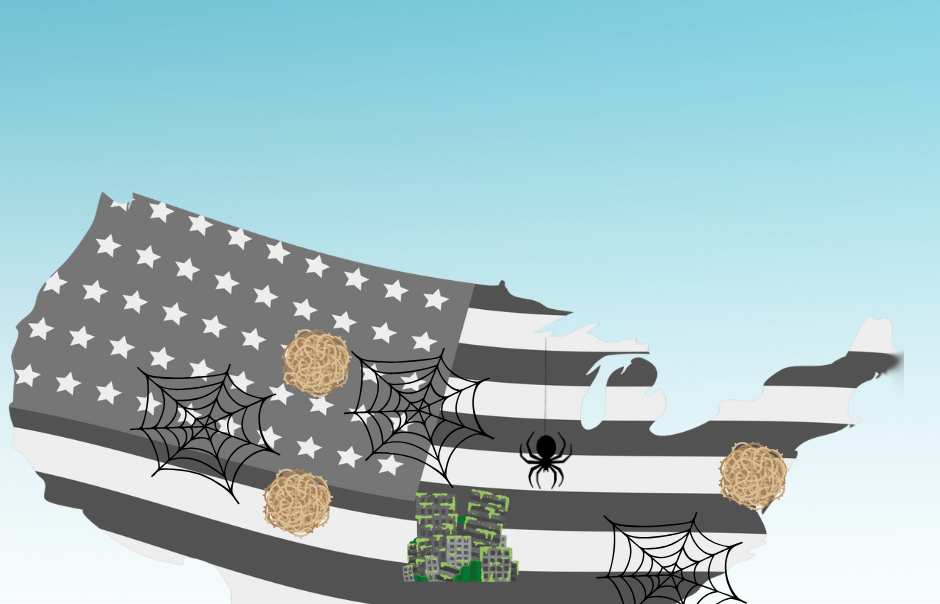
But why has yet another skilled and renowned scientist left the US for China? Liu is not an isolated case. The last several months of President Trump’s second term have seen numerous Chinese-American scientists leaving the US to return to China.
This is not a recent trend, either. The departure of China-born scientists back to China has “nearly [tripled] between 2010 and 2021, [and] has been accelerating since 2018, coinciding with the US Department of Justice’s China Initiative.”
This initiative has been accused of targeting Chinese scientists, leading to damaged careers and cut funding. Intended to prosecute suspected Chinese spies in US industries conducting economic espionage, but most cases were against academic scientists, many of them Chinese American.
In March of 2025, Nixon Peabody, a high level law firm that has previously assisted MIT scientist Gang Chen fight espionage charges, which had to be dropped due to a lack of evidence (leading to the end of the China Initiative), reported that recent law enforcement actions led them to believe that officials felt empowered to bring about more cases against scientists on charges of espionage.
In the same article, Nixon Peabody advised scientists and university administrators, cautioning them on what to do against government overreach. The threat of false, career-ruining espionage charges has previously driven the exodus of Chinese scientists.
However, the reason the trend has accelerated recently lies in cuts to government funding in various fields. The federal government has “paused or terminated billions of dollars of grants, proposed slashing research funding by more than 40% for key research agencies in the next fiscal year,” forcing graduate schools and universities to reduce incoming cohorts and reduce the funding of faculties, putting careers in danger. Several industry representatives report increases in the number of scientists applying for jobs.
A project tracking Trump’s cuts to the budget and funding in the sciences “has tallied more than 2,482 terminated NIH grants worth $8.7 billion and 1,669 terminated National Science Foundation grants worth $1.5 billion as of mid-June.”
Thousands of federal employees at various health and science agencies such as NIH and HHS have been laid off, as universities prepare for funding cuts by halting hiring and limiting graduate student positions.” Even private sectors and companies are impacted, with “some federal support severed—including support for the development of new vaccines and cancer treatments.”
Among many agencies and fields, “Chinese and Chinese-American researchers face a tremendous impact, given their heavy representation in the field.” Many, faced with the insecurity of funding and jobs, are reevaluating their futures and careers in the US in a way that could shift the balance of the biopharma industry.
This has led Chinese-American scientists, such as Liu Jun, to begin leaving the US and returning to China. Highly skilled professionals, mostly of Chinese descent, are returning to China or otherwise going abroad in favor of American institutions. In the decade between 2010 and 2021, “nearly 20,000 Chinese-born scientists left the United States.”
These include neuroscientist Yan Ning, who left Princeton to lead the Shenzhen Medical Academy, and Gang Chen, a top MIT engineer who returned to Tsinghua University after being cleared of espionage-related charges.
Geopolitical developments, restrictive visa policies, and a cultural atmosphere of suspicion and scrutiny towards Chinese-American scientists “are repelling top talent, rather than attracting it.” Chinese and other Asian scientists “worry about surveillance, unjust scrutiny or even prosecution,” all while federal funding shrinks rapidly, threatening job security.
Meanwhile, China has reportedly seen an opportunity to draw departing scientists to Chinese institutions and programs. An ad welcoming “global talents to pursue career development and entrepreneurship in #Shenzhen, #China” circulated in February 2025, coinciding with the lay-off of thousands of scientists from federal research facilities. Three Democratic Congressmen co-wrote a letter to the Secretary of Commerce, warning that the current massive lay-offs “jeopardize [American] ability to compete with the People’s Republic of China.”
As Nate Hultman, formerly the senior advisor to President Biden’s climate envoy, puts it, “Economic competitors would be more than happy to hire the talent that we have so carefully cultivated here [in America].”
CNN reported this March, citing US intelligence sources, that Russian and Chinese intelligence agencies are ramping up their recruitment of US federal employees, targeting those who have been fired or fear that they are close to being fired. They hope to find valuable information about the US governmental bureaucracy and infrastructure.
“At least two countries have already set up recruitment websites and begun aggressively targeting federal employees on LinkedIn,” one of the federal sources states. A document by the Naval Criminal Investigative Service says that the intelligence community has assessed that foreign countries are attempting to capitalize on President Trump’s mass lay-offs by recruiting disgruntled federal employees.
A senior geologist based in Beijing, the capital of China, reported to the South China Morning Post that some Chinese programs offered desirable postdoctoral positions aimed at researchers thinking about or planning to return to China, amid turmoil in the US.
“I’ve heard of offers approaching US$100,000 per year for three years,” the same researcher reported. A leading Chinese-American biologist who has worked in the US for decades says that many people are making moves, although they are not going public about it.
Foreign countries are capitalizing on the current political turmoil in the US, which has led to skilled researchers losing their jobs and considering relocating abroad for new opportunities. This has already led to Chinese-American scientists returning to China.
The trend that has been seen in the past several years is clearly accelerating, driven by budget cuts and lay-offs. In the future, this could lead to a brain drain in the US, giving its adversaries a scientific edge. However, the consequences of this unforeseen exodus on the US and the entire scientific world remain yet to be seen.
 The AAPI Angle
Leave a comment