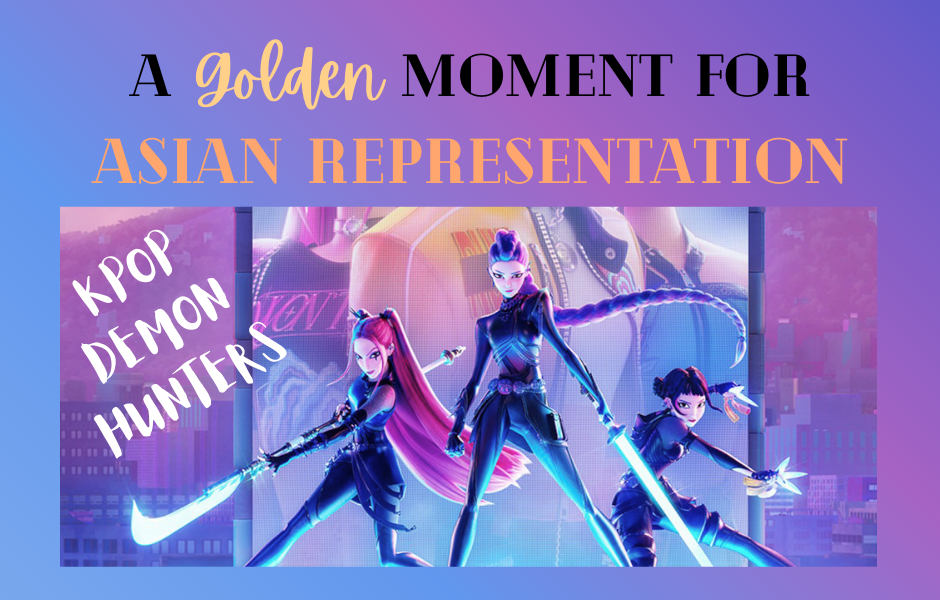
With well-done visuals and stunning music, KPop Demon Hunters burst onto the movie scene a few months ago to instant fame. It has since broken the record for most watched Netflix movie with over 266 million views. The movie has beat some of Netflix’s hottest shows in view count, as well, including Squid Games and Wednesday, which both released new seasons this year. Songs from the movie have exploded in popularity, including “Golden,” which now holds the top spot on the Billboard Hot 100.

According to a summary on the Internet Movie Database (IMDB), KPop Demon Hunters is a movie about how “A world-renowned K-Pop girl group balances their lives in the spotlight with their secret identities as demon hunters.” The animated movie is set in Korea and features a majority-Korean cast, and its co-writer and co-director, Maggie Kang, is Korean-Canadian.
The movie is permeated by aspects of Korean culture. Aside from its music, the movie also weaves Korean folklore, architecture, and even ancient Korean attire into its frames. For instance, the designs of the animals Derpy the tiger and Sussie the magpie, the cute animal familiars who captured the audience’s hearts, were based on minhwa, a style of Korean folk art popular during the Joseon era, not to mention other culturally-inspired aspects of the movie.
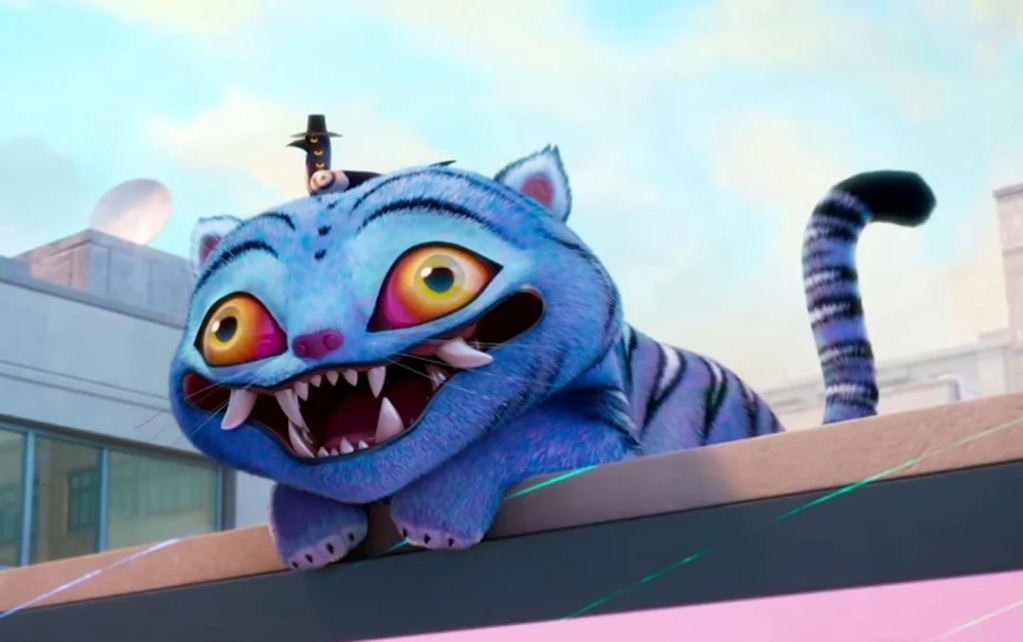
Source: https://kpop-demon-hunters.fandom.com/wiki/Derpy_and_Sussie
The movie, and its widespread recognition, have made many Korean-Americans feel like their identity has been recognized, including the movie’s lead actors. “Just looking at my career as an Asian-American … [KPop Demon Hunters is] such a special movie that helps us feel seen,” said Arden Cho, the voice actor for Rumi, the movie’s main character, in an interview with Netflix. “It’s our story.” In a different interview, with Deadline, Cho states, “I feel like the love and response has been so refreshing and fun because it’s not really about our characters being Korean or Korean American, which they are. We are so unapologetic about it, and we love our culture. But I love that it’s such a fun movie that’s being celebrated for how great it is.”
The AAPI Angle interviewed a Korean-American teenager, who will go by Liam for the sake of anonymity, about his experience with KPop Demon Hunters. “My first reaction was, ‘Wow, this movie is definitely going to be a joke,’” Liam said. “But as I continued into the movie, it was actually really well put together. The music was amazing, obviously, but the representation of Korean culture, Korea, K-pop, etc. was really cool to me.”
After its release, shorts clips of KPop Demon Hunters or edits of scenes from the movie flooded social media. Liam said, “I saw [KPop Demon Hunters] first on sites like Instagram, and that drove me to watch the movie.” Despite initial skepticism, he resonated with the movie. “A lot of little details reminded me of being Korean-American — the mix of old traditions with modern [aspects], and also the way the characters balanced their Korean side with western influences.”
Regarding the movie’s popularity, Liam commented, “Seeing this movie blow up showed people that Asian-American stories can be fun, mainstream, and still meaningful.” Then, adding a caveat, he said that movies like KPop Demon Hunters “[help] people learn more about the culture in a fun way, but at the same time, Hollywood can sometimes package it in a way that feels a little too polished. Still, I’d say overall it’s more positive — it gives us visibility and makes Korean culture feel cooler worldwide.”
The Asian-American community has come a long way from its representation, or, more often, lack thereof in the pop culture of the last century. KPop Demon Hunters’ immense popularity serves as a promising indication that Korean-American culture, and, more generally, Asian-American culture, is being accepted by a wider audience around the United States. Hopefully, this trend continues as more screenwriters, directors, and actors work to create other movies as “golden” as KPop Demon Hunters.

 The AAPI Angle
Leave a comment