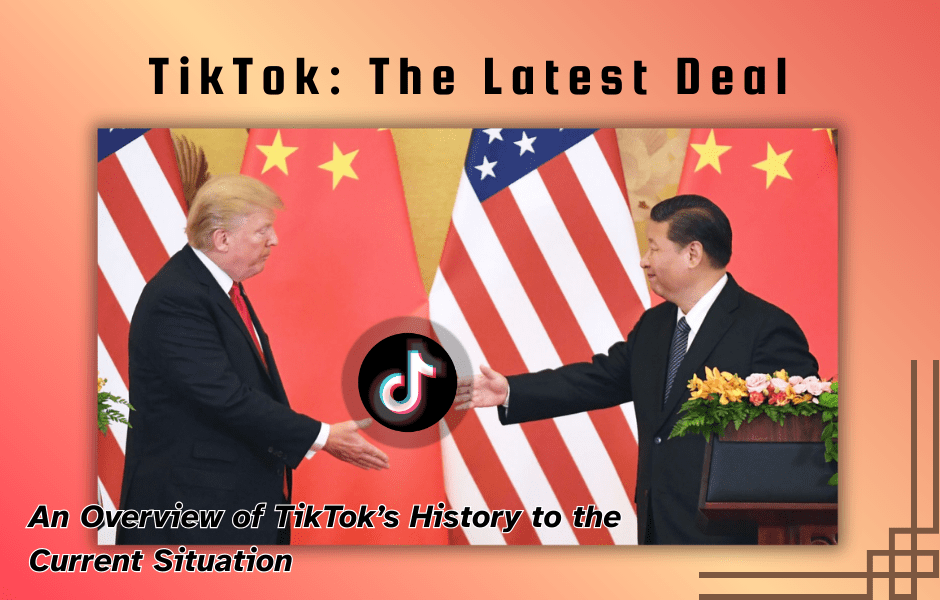
TikTok has become thoroughly embedded in daily life. From students filming short dances in high school locker rooms to adults scrolling videos while in public transit, the social media app is now a household name. Despite this, the app has only been around for eight years.
TikTok, a Chinese social video app, debuted in 2017. The app was developed by Chinese internet technology company ByteDance. Since then, its user and content base have grown tremendously. Now, its sphere of influence spans the entire United States, with a user base as diverse as the country itself. Along with the development of its sway over an entire generation, TikTok has also appeared on the radar of national security officials.
History
The controversy began in September 2019, when The Washington Post reported that depictions of protests in Hong Kong that were common on other social media sites were, unusually, not present on TikTok. To contrast, the #trump2020 tag received more than 70 million views. Soon after, The Guardian released an article titled “Revealed: how TikTok censors videos that do not please Beijing.”
Later in 2019, American politicians began raising concerns about TikTok’s influence. The following year, India banned TikTok, where the app remains banned today, due to a border clash with China. In July 2020, President Donald Trump first brought up considering banning TikTok.
Throughout the rest of Trump’s administration, the United States had several back-and-forths with the app. Trump issued multiple executive orders regarding TikTok, including one attempting to force TikTok’s parent company, ByteDance, to sell the app within ninety days, while TikTok sued the Trump administration for an alleged violation of due process in issuing the executive orders. Given Trump’s loss to Joe Biden in the 2020 election, no concrete changes resulted from Trump’s orders.
In 2022, concerns about TikTok resurfaced. Despite announcing that it migrated its data to U.S. servers, TikTok still received skepticism from U.S. officials about the risk of the Chinese government accessing user data. Subsequently, FBI Director Christopher Wray warned that Chinese officials might exploit the app’s recommendation algorithm to disseminate Beijing’s agenda.
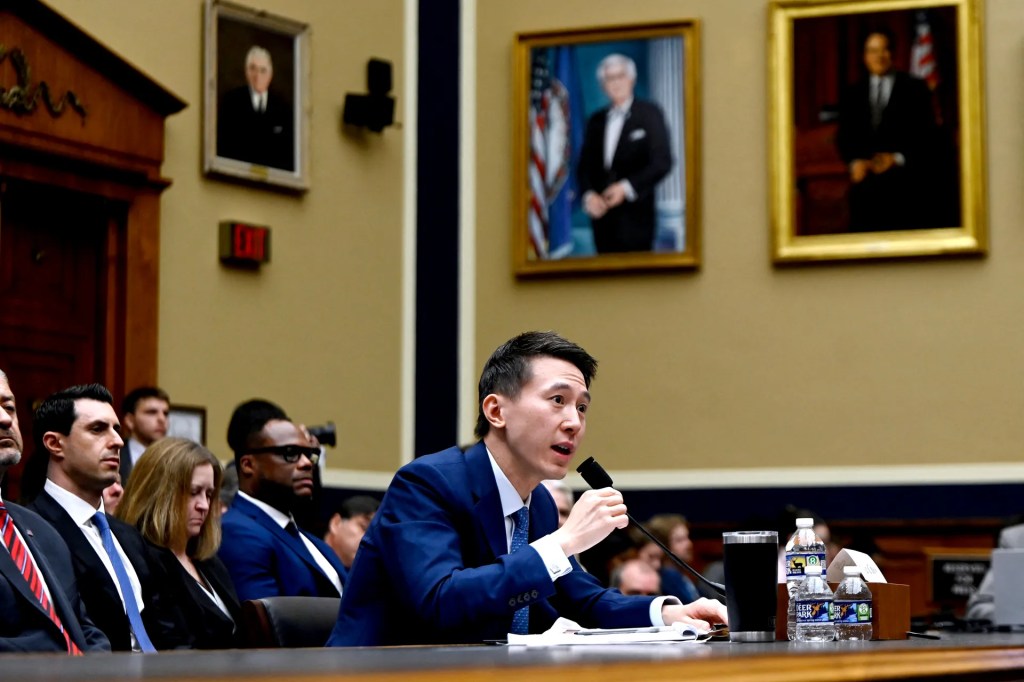
In February 2023, the White House required federal agencies to ensure that TikTok be deleted from all government-issued mobile devices. The following month, legislators questioned TikTok’s CEO, Shou Zi Chew, a Singaporean, through a six-hour congressional hearing about the app’s ties to the Chinese government.
A year later, in 2024, a ban-or-sell bill on TikTok emerged in Congress. During this time period, TikTok sent lobbyists to D.C. and sent notifications urging its users to “speak up now” against the ban, leading to an influx of calls to congressional offices. Despite this, the bill passed Congress and then the Senate, and was subsequently signed by President Biden.
Following, ByteDance sued the U.S. federal government to challenge the bill, stating that the law was unconstitutional. Nine months later, in December, TikTok was defeated in a federal appeals court, where a panel of judges unanimously upheld the law that would lead to its ban. In January, the Supreme Court also unanimously upheld the ban-or-sell law. The ban was for two days later, January 19, 2025.
On January 18, TikTok users were no longer able to watch videos on the app. The app was also taken down from most app stores, including the Google- and Apple-run app stores.
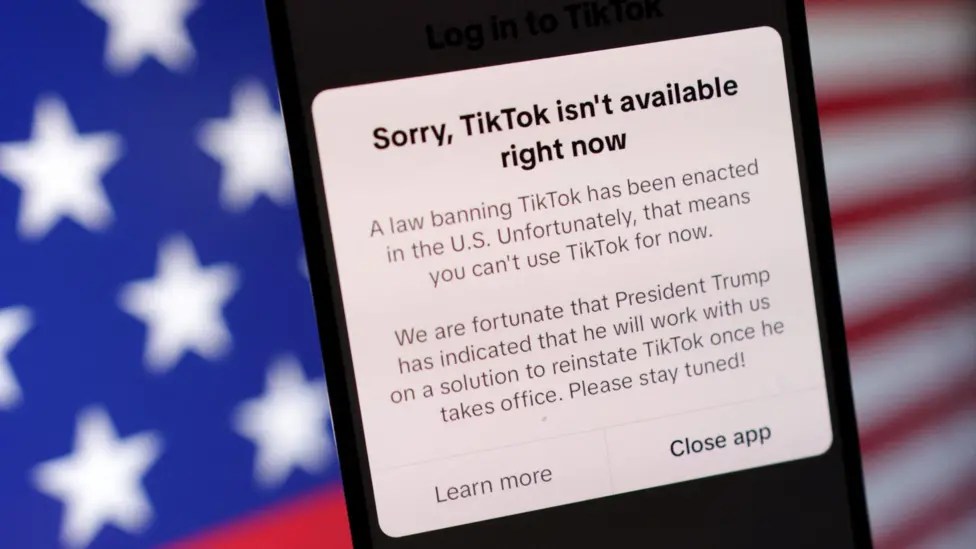
However, in a dramatic turnaround, the app was unbanned just twelve hours later by President Donald Trump. The move represented a startling reversal for the president, who had attempted to ban the app during his first term. The app’s over 170 million American users regained access to the app intermittently throughout the rest of the week as the ban was postponed.
Throughout the rest of 2025, the deadline on TikTok’s ban has been pushed back four times by President Trump.
Today
As of now, the deadline for a deal with TikTok is December 16, giving time for the United States government to complete a deal with Chinese government officials regarding the app. The deal was announced this Monday and involves the acquisition of TikTok by American companies. “We have a group of very big companies that want to buy [TikTok],” Trump announced.
The agreement would take control of TikTok away from ByteDance. A group of American companies, including Oracle, who hosts many of TikTok’s United States servers, Silver Lake, and Andreessen Horowitz, as well as current American ByteDance stakeholders, would claim 80% ownership of the app. In comparison, in the new deal, ByteDance would only retain around 20%, hovering at the legal 20% threshold that indicates a “significant influence” in a company.
This deal, a “major diplomatic breakthrough,” seems to be a win-win for both America and China. In America, the app resolves both the national security concerns from officials, as well as users’ concerns that the content and community on TikTok will no longer be accessible.
On the other hand, the agreement could give Beijing more leeway in its other dealings with the United States. Compared to when the ban was first brought up, TikTok’s algorithm is no longer as novel. For the Chinese government, yielding on the issue of TikTok could be a strategic way to gain an edge in negotiations on issues the government is more concerned about, such as export controls and tariffs.
Yesterday morning, after a phone call intended to finalize negotiations with Chinese President Xi Jinping, Trump said that he “made progress” on, but didn’t fully conclude negotiations. On the other hand, both leaders indicated feeling satisfied with the call. Trump and Xi agreed to meet in person at the Asia-Pacific Economic Cooperation (APEC) summit in South Korea in six weeks, while Xi agreed to come to the U.S. at an “appropriate time,” according to USA Today.
How the deal will affect the app’s over 170 million user base is unclear. It is still ambiguous whether or not TikTok also plans to sell its algorithm. Although TikTok would still run at the same speed without its algorithm, the app would not feel as effective, which would negatively impact user experience.
Overall, the framework for the long-promised TikTok deal has come into place, and its finalization will likely soon follow. For now, on an international scale, the deal seems to reflect a positive development in U.S.-China relations. For the app and its users, the impact remains to be seen.
 The AAPI Angle
Leave a comment