
Introduction
How does social media shape our society today? From video-sharing giant TikTok to professional networking platform LinkedIn, modern platforms provide spaces where people express themselves, stay connected, and communicate instantly across distances.
For Asian-Americans, social media has become especially important. Recent data suggest that more than 84% of Asian-Americans use social media daily, often to stay in touch with relatives overseas, consume content in their native languages, and access news and information tailored to their communities. In many ways, these platforms help bridge cultural, geographic, and generational divides.
However, the convenience that social media gives the community also ferments hate speech and racism. One such recent victim is politician and candidate for Ohio governor, Republican Vivek Ramaswamy (check out our analysis of his political career here).
“In 2025, I saw a spate of shocking racial slurs and worse on social media,” said Ramaswamy in a Wall Street Journal column. The dyed-in-the-wool conservative recently announced his personal departure from major platforms such as X and Instagram, citing harassment.
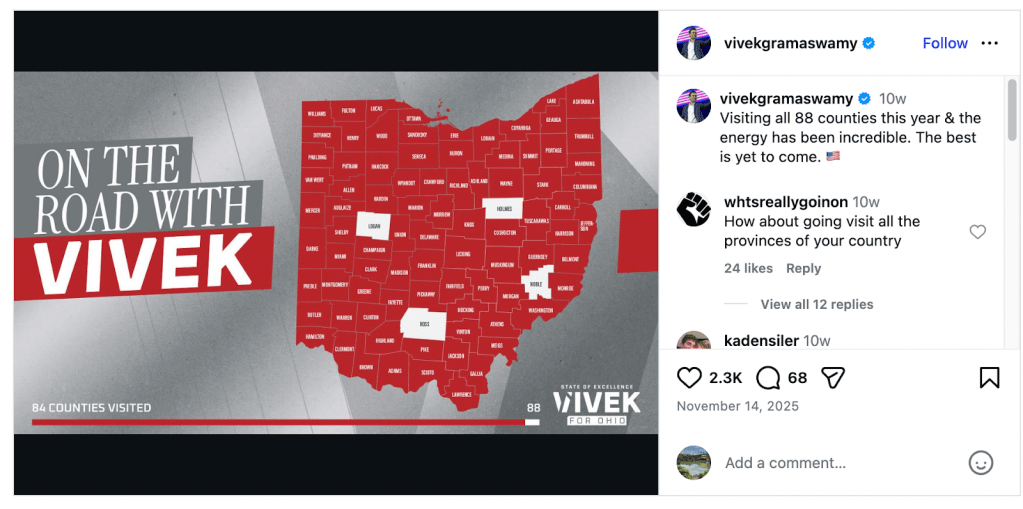
An example of a comment attacking Indian-American Vivek Ramaswamy’s “American-ness.”
Ramaswamy’s experience is not an isolated incident, nor is it exclusive to one side of the political aisle. It is well known that Asian-Americans from across the country have often borne the brunt of harassment that puts their race, ethnicity, or perceived foreignness front and center.
However, even though this highlights a vivid example of online harassment, it raises a broader question: how widespread are racist attacks and sentiments against Asians online? Furthermore, how important is social media to Asian-Americans, and what platforms do they frequently use? To answer all these questions, it is necessary to look beyond individual examples and look at how data has shifted.
As such, we at The AAPI Angle went a step further and interviewed 21 Asian-Americans in our community about their experience on online platforms. (You can view the full results here.)
Analysis
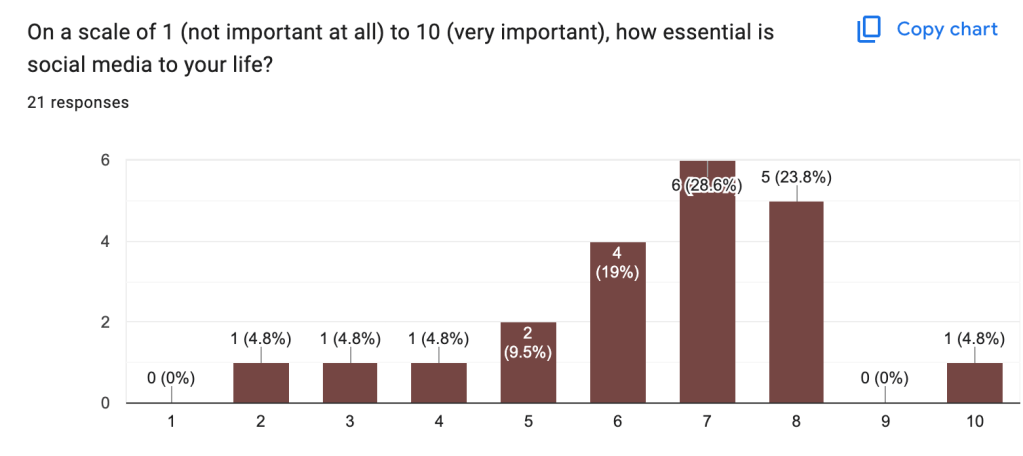
First, our poll finds that Howard County Asian-Americans both use various types of social media and increasingly view it as essential to their lives. When asked on a scale of one (not important at all) to ten (very important) how important online platforms were to them, a majority of respondents responded with a seven or above.
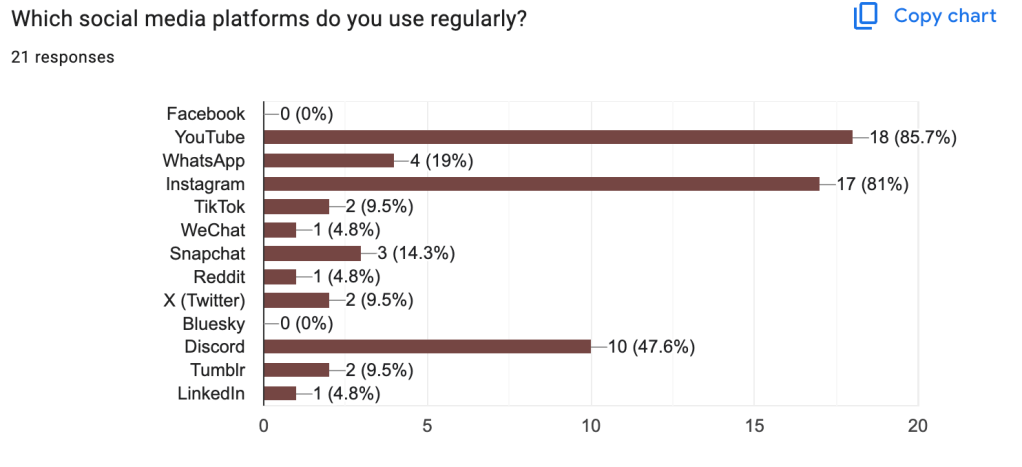
Furthermore, YouTube and Instagram were identified as two platforms that nearly all respondents used in their daily lives, with 85% of respondents claiming regular usage of YouTube and 81% frequently browsing Instagram. Discord was also a popular platform, with nearly 48% using the versatile communication app.
However, despite the general importance of social media platforms to most respondents, racist and bigoted attacks against Asian-Americans were indeed commonly observed. A shocking 47% of students reported having seen harassment targeting specific groups online, despite strong efforts by platforms like Instagram to cut down on racially motivated comments.
Some students emphasized having encountered frequent scapegoating of certain minority groups. In particular, junior Arthur Wang described commonly encountering harassment aimed at Indian communities. “The main harassment I saw online, particularly in the comments sections (sic) were towards Indians. These comments ranged from stereotypes to people advocating moving away from Indians,” said Wang when asked to elaborate.
Others, however, reported seeing little to no racist content. “As far as I know, I don’t really see anything like that, so I feel like some people might just be victimizing themselves,” said sophomore Bosong Shu. At the same time, Shu also acknowledged that his own observations may reflect careful curation of his online experience. “This might also be because all the people I am friends with are cool people,” he added.
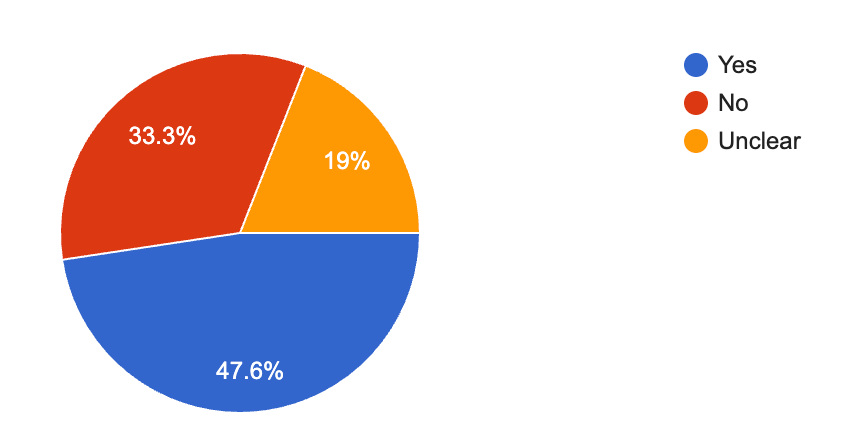
The full results of the question asking respondents about their viewing of racially-motivated harassment online. A near-majority of students claimed that they had seen racist content over the past few years.
Regardless of individual exposure, respondents overwhelmingly agreed that social media companies were failing to address racism online. When asked, 81% responded that companies were not doing enough to combat racist content. Most respondents emphasized the need for improved moderation, better algorithms and flagging, and greater efficiency in taking down and identifying content that demeans or harasses.
“Social media companies need to implement better moderation strategies and actually crack down on attackers, not victims,” one anonymous respondent said. “So many times, I’ve tried to report comments on TikTok, and nothing would happen.”
This shows the delicate balance between allowing for conscientious debate and taking action on content that demeans or systematically attacks specific racial or ethnic groups. Many social media companies have been repeatedly criticized for allowing racist content to flourish online, yet most have been unsuccessful in stemming the tide. As our survey results suggest, Asian-Americans continue to face obstacles in fully expressing their identity online.
Takeaway
Ramaswamy’s departure from social media underscores a painstaking reality for the AAPI community in the United States: social media, despite its vitality in communication, entertainment, and networking, is a hotbed for racist content and demeaning language.
Therefore, the question for Asian-Americans is not whether social media is necessary, as it clearly is, but whether it can transform from a space where the AAPI population is forced to carefully navigate around barriers to a hub for free expression, free speech, and free movement.
 The AAPI Angle
Leave a comment