This article was written by Eileen Wu.
Overview
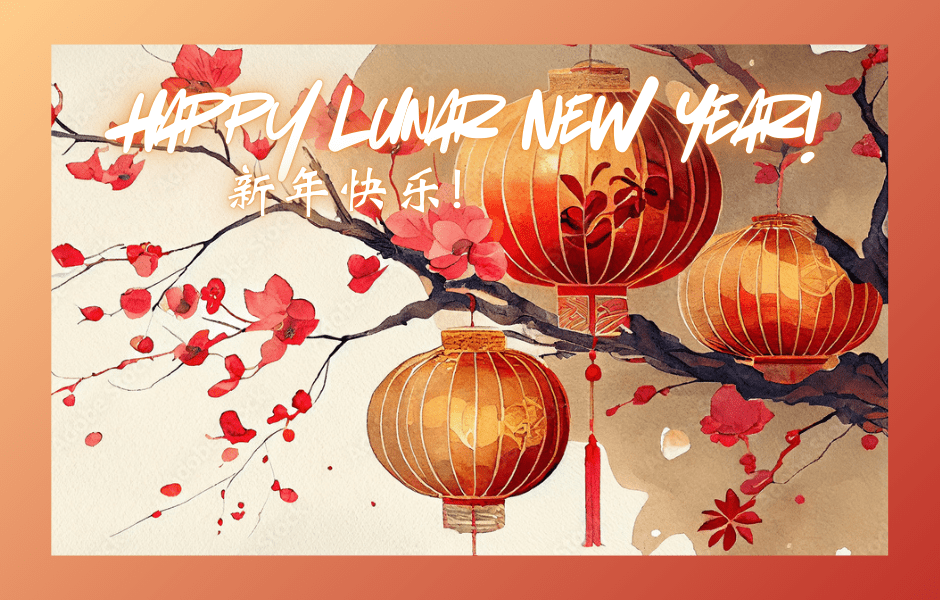
Lunar New Year is celebrated on the first day of the lunisolar calendar each year. As such, its date varies in the Gregorian calendar, but the date typically falls between late December and early March. This year, Lunar New Year will be observed on February 17, 2026. The holiday is celebrated widely in East Asia, including China, Vietnam, Singapore, Malaysia, and Korea. As such, it is the holiday with the greatest number of celebrants in the world.
To specify further, the Lunar New Year of this article specifically refers to Chinese New Year, also known as the Spring Festival. Other Lunar New Year celebrations, such as those of Korea and Vietnam, typically fall on the same day as Chinese New Year, though they may feature different traditions and durations.
History and Evolution
Chinese New Year (also known as the Spring Festival) originated over four thousand years ago. The earliest prototype of the holiday is believed to be an ancient Chinese celebration of the end of the harvest in autumn. However, the first dated Chinese New Year celebration occurred in the Warring States period (475 – 221 BCE). Later, after the Qin dynasty was founded, the celebration continued, evolving traditions such as cleaning one’s house thoroughly in the days preceding the new year.
Korean New Year (also known as Seollal) was first referenced in 7th-century Chinese historical works. The holiday gained importance in the 13th century, under the rule of the 21st King of Silla, where it became one of the nine major Korean festivals. Some of the traditions of Korean New Year differ from those of Chinese New Year; for instance, rather than giving red envelopes, there is a tradition of giving white envelopes.
The Lunar New Years of other East Asian countries have similar history, but this article will not elaborate on them.
In the modern day, Lunar New Year, as a holiday, has gained international recognition from the United Nations. In December 2023, the United Nations resolved to recognize Lunar New Year — specifically, the version based on the lunisolar Chinese calendar — as a floating holiday, meaning that UN bodies are encouraged to avoid meetings during that day. Lunar New Year is the eighth floating holiday to be observed internationally by UN staff.
Furthermore, some states in the United States, including California and New York, officially celebrate Lunar New Year as a public holiday. Many school systems around the nation offer days off to their students on Lunar New Year; see the AAPI Angle’s earlier article, “Do AAPI Holidays Get a Day Off?,” for more information about this.
It is also worth mentioning that “Lunar New Year” is considered a somewhat contested term in the United States. Originally, most people referred to the holiday as Chinese New Year. However, after receiving backlash from groups such as the Korean- and Vietnamese-American communities, most have instead adopted the more inclusive Lunar New Year.
Celebrations in America
Many Asian-American communities around America host Lunar New Year celebrations, whether those be private parties or public performances.
In recent years, celebrations have become much more commonplace. There are some hosted by Chinese schools, museums, alumni associations, and even local governments. One example is the Lunar New Year celebration in Columbia Mall of Howard County, which was organized by the AAPI Commission of Howard County and sponsored by County Executive Calvin Ball.
Specifically, the celebrations hosted by many Chinese schools include “galas” in the fashion of China’s Spring Festival Galas. These galas are stages where students and invited performers demonstrate singing, dancing, playing instruments, and many other talents, typically drawing on traditional Chinese cultural arts.
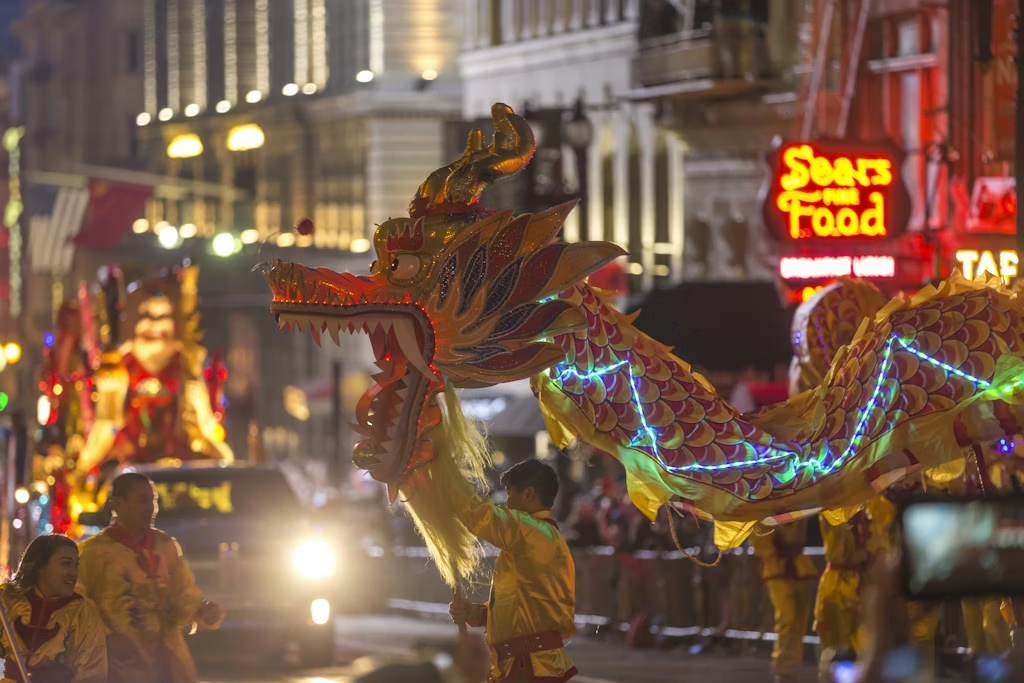
Some of the most notable Lunar New Year celebrations in the United States include the multi-day celebration in San Francisco, California, featuring a signature grand parade, as well as Manhattan, New York’s vibrant street fair. Other cities with notable Asian-American presence also have noteworthy celebrations, including Houston, Boston, and Chicago.
Chinese New Year, in particular, emphasizes reuniting with one’s family. However, most Chinese-American immigrants, especially those with children in school, are unable to visit their family that is still in China, due to limited time off. As such, many Chinese-American households host dinners for their family and close friends to celebrate together. It is a tradition for each invited family to bring a few homemade dishes, similar to potluck fashion, to the dinner.
This Year (Fire Horse)
Each year in the lunar calendar is named after one of the twelve animals in the Chinese zodiac (rat, ox, tiger, rabbit, dragon, snake, horse, sheep, monkey, rooster, dog, and pig) and one of the five elements (metal, wood, water, fire, and earth). Each combination will appear every sixty years.
This year is the year of the Fire Horse, which previously appeared in 1966 and will next appear in 2086. People born in the year of the horse are said to be confident, agreeable, and responsible, but also easily swayed and impatient. On the other hand, among the five elements, fire represents propriety, enthusiasm, and passion.
Putting these together, the Fire Horse symbolizes transformation, change, and progress.
Traditions
This section will primarily focus on Chinese New Year traditions. Note that it is not an exhaustive list, and that different regions of China celebrate differently, as well.
(1) Cleaning up the house
Cleaning the house is a long-practiced Chinese New Year tradition. It is believed to drive the bad luck of the past year away and welcome good luck in the new year.
(2) Pasting Spring Festival couplets on doors
These red-colored couplets demonstrate artistic mastery of the Chinese language and calligraphy and typically contain positive messages, such as blessings for good fortune in the new year. These decorations are a traditional part of the Chinese New Year setup. The most common formation is to have two vertical couplets on either side of the door, and one horizontal one above the door.
(3) Pasting the “Fu” character on doors
The 福 (fú) character symbolizes good fortune, and it is commonly pasted on doors to signal the arrival of such good fortune. For more information on this tradition, see the second anecdote in the section below.
(4) Family reunion dinner
Reuniting with family, even across great distances, is one of the core themes of Chinese New Year. The night before Chinese New Year, family members gather for a homemade dinner. The centerpiece of the table is typically a full fish, since the word for fish in Chinese is a homophone for surplus, meaning that the family will have great fortune in the new year.
(5) Eating dumplings or glutinous rice balls (tang yuan)
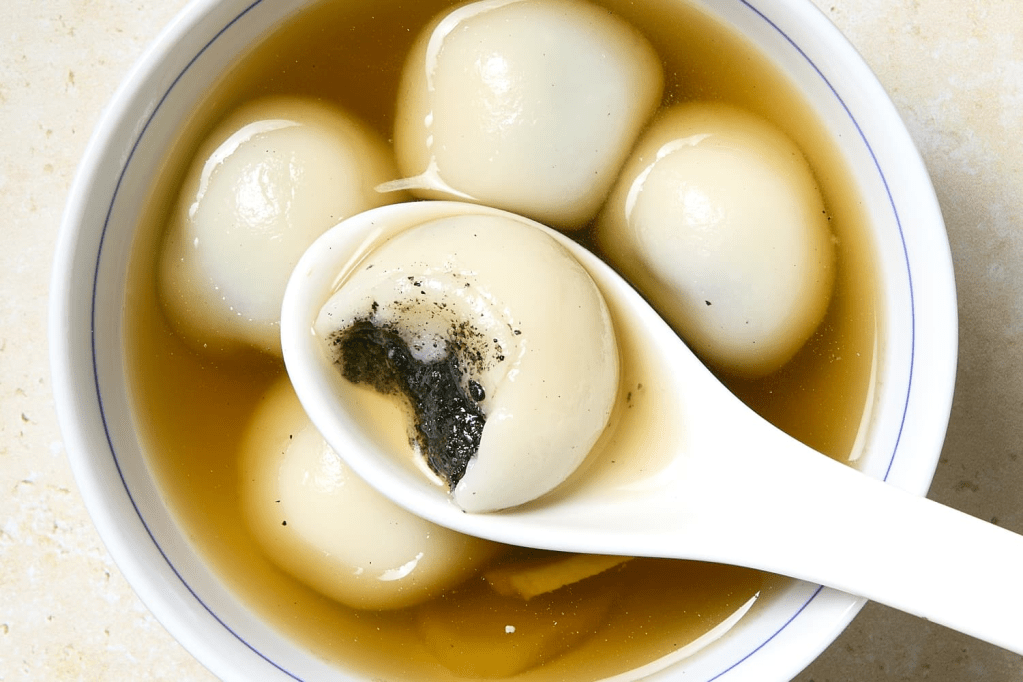
Due to their shape, which is similar to ancient Chinese currency, dumplings are eaten during the new year to symbolize wealth. Dumplings are typically homemade, from the wrap to the filling, together with family. Some family elders will place coins inside some dumplings; whoever eats the dumpling with the coin inside will have good luck. Another food that is popular during the new year is glutinous rice balls — this tradition mainly relates to southern China. The round shape of the glutinous rice balls symbolizes harmony and reunion.
(6) Setting off fireworks
Firecrackers are typically set off at midnight. However, recent regulations prohibit the setting off of firecrackers in cities due to possible safety hazards.
(7) Giving red envelopes
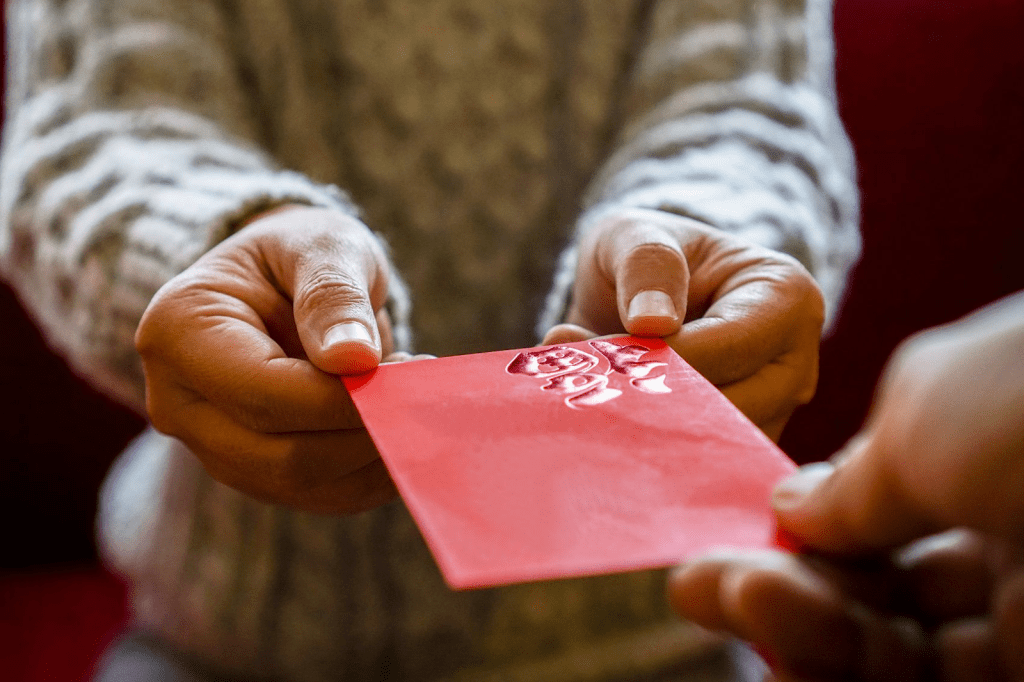
Red envelopes, which are literally red-colored envelopes containing lucky money, are prepared for children by the older generation (parents, aunts, uncles, grandparents, close family friends, etc.) during the new year. The money symbolizes safety and security for the children who receive it. For some families who live overseas, relatives still send red envelopes through online transactions.
(8) Other traditions
Other traditions include pasting paper cutouts on windows, wearing new clothes, displaying images of “door gods” on doors, going to temple fairs, watching lantern displays, avoiding cutting one’s hair, and more.
Stories Behind the Traditions
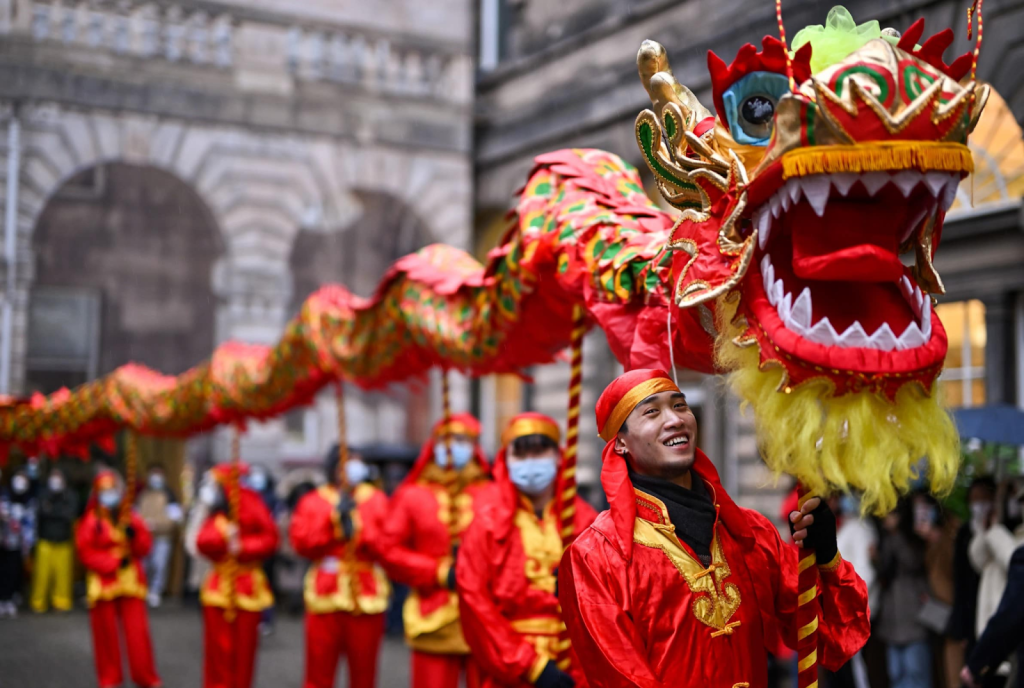
There are many interesting anecdotes surrounding the various Lunar New Year traditions. The following stories are Chinese folk tales. The first one is most well-known, even receiving reenactments during lion dances, as the lions in lion dances look similar to the supposed form of the Nian monster.
(1) Legend of the Nian Monster
The legend surrounding why people set off firecrackers and set up red couplets during Lunar New Year goes like this:
Once, there was a village that would be besieged by a dastardly monster called Nian (in Chinese, this is the same character as the word “year”) every winter. Every time the new year rolled around, all the villagers would live in fear that the monster would once again attack another villager.
One day, a traveling old monk arrived at the village. He was quickly taken in by a kindly old couple, who provided him with a sumptuous meal and hospitable accommodations. However, he noticed that the old couple seemed very fearful and did not want to leave the house.
When he asked why, he discovered the story of the Nian monster. The old man pondered hard. Finally, he thought of a solution to their problem. He told the old couple and all the other villagers to tape red paper around their doors and windows, and to set off firecrackers when the Nian monster came.
The villagers did as he said, and the vibrant red color and loud noise from the firecrackers successfully scared the Nian monster away. After that, all the villagers lived in peace, and they subsequently developed a tradition of setting off firecrackers and decorating their houses with red decorations during the new year.
(2) Why “Fú” is Displayed Upside Down
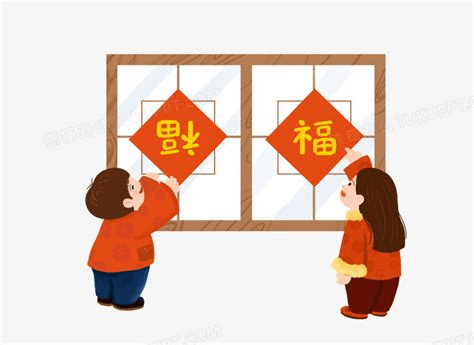
It is common during Lunar New Year for households to tape a red 福 (fú) character outside of their doors, because the character means “fortune and prosperity.” However, there is one catch, which is that the 福 (fú) character is typically displayed upside down. The reason for this dates back to the following story:
One day, a rich family was getting ready for the new year, and their servants were busy arranging all the decorations. In haste, one servant accidentally placed the 福 (fú) character on the main door of the rich family’s estate upside down.
When the head of the family arrived, he was very angry with the servant and prepared to punish him. After all, if the 福 (fú) character was upside down, what if it caused the family’s fortune to diminish?
However, a clever servant quickly stepped up to save his friend. He told the head of the family, “Master, that servant had no bad intentions! In fact, he was actually blessing the family with greater prosperity.”
The head of the family paused and inquired why.
The clever servant said, “That is because when 福 (fú) is upside down, that means that ‘福到了’ (fú dào le).”
The head of the family was very satisfied with this explanation. Instead of punishing the servant, he rewarded both servants handsomely.
To clarify, the clever servant’s explanation involves a pun in Chinese. “Upside down” is 倒 (dào) in Chinese, which is a homophone for the character 到 (dào), which means “arrive.” So, what the servant meant is that when 福 (fú) is upside down, it means that 福 (fú)/prosperity has arrived.
This explanation pleased the head of the family, who greatly desired good fortune. Due to the rich family’s example, placing 福 (fú) upside down quickly caught on and became a longstanding tradition.
 The AAPI Angle
Leave a comment