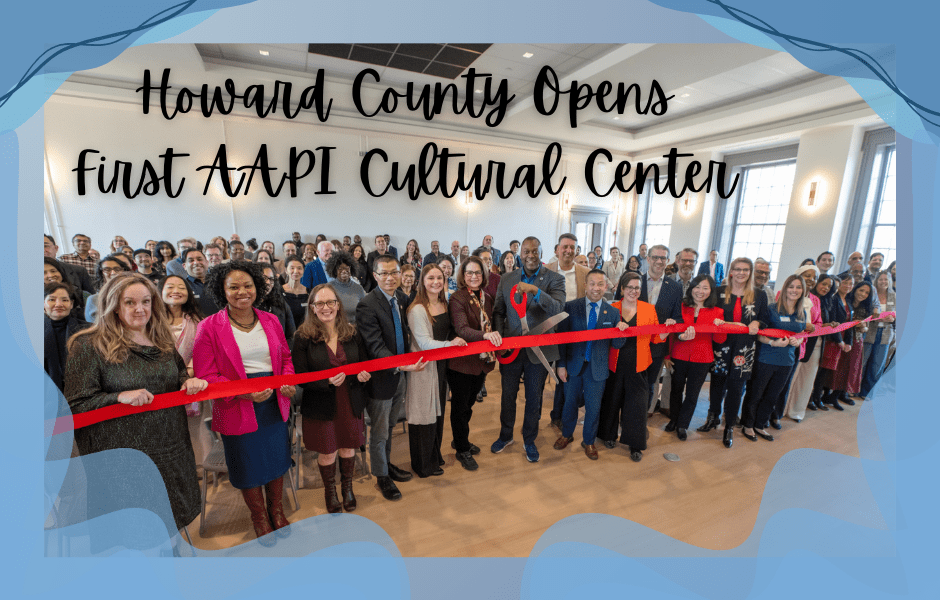
This article was written by Eileen Wu. The photo used in the cover is courtesy of the Howard County Government.
Soft classical music filled the halls of the newly opened Capitoline Center on February 28, 2026, but the real resonance came from the voices and pride of Howard County’s Asian American and Pacific Islander (AAPI) community. Once the Howard County Courthouse of historic Ellicott City, the building has undergone a three‑year, $20 million transformation. Rather than simply preserving history, this renovation creates a new cultural home for one of the county’s fastest‑growing communities.
At the heart of the renovation is Howard County’s first AAPI Cultural Center, now housed within the Capitoline Center alongside the Howard County Arts Council’s headquarters and artist studios. In Howard County, where roughly 20% of residents identify as AAPI, the center represents long‑awaited recognition and a dedicated space for cultural expression, education, and community gathering.
“This move is a turning point for the arts and culture in Howard County,” said County Executive Calvin Ball during the opening ceremony. “This building is no longer just a symbol of our civic past … It is now a living, breathing center of culture and connection.” He continued, “Today marks a day that will continue to be etched into history and start a new chapter, not only as a celebration, but as a reinvention.”
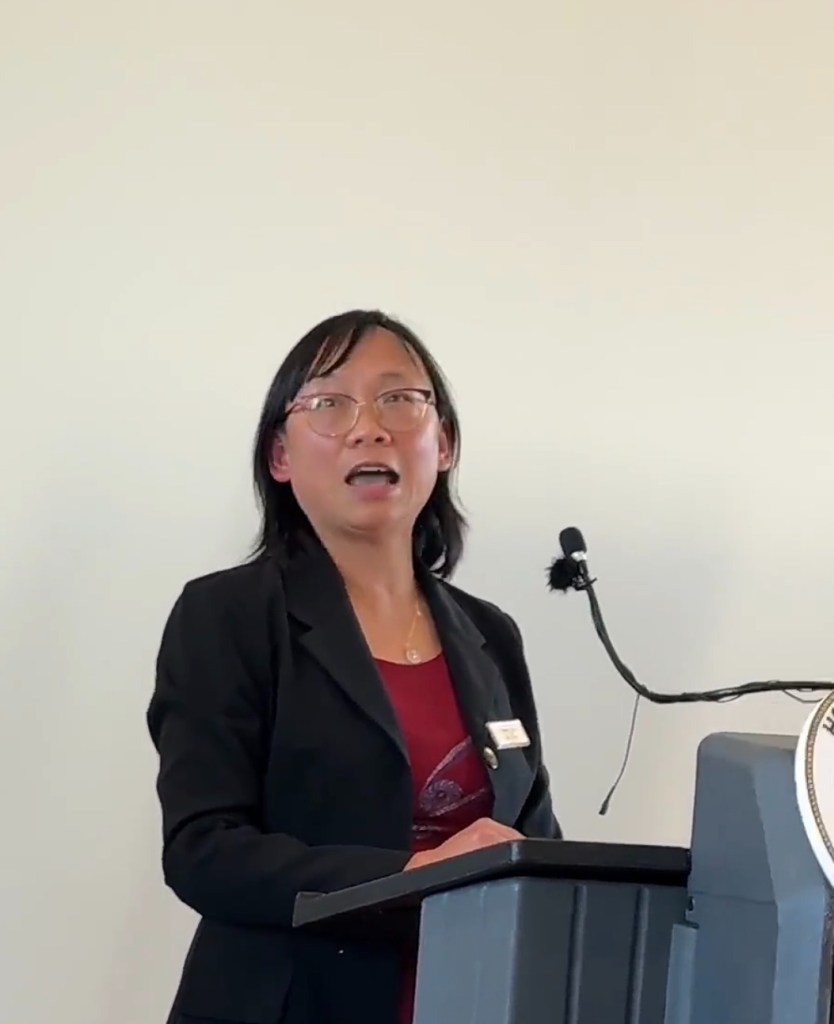
State Senator Clarence Lam, speaking on behalf of the Howard County Delegation, emphasized the significance of the moment for local Asian American residents. “We’ve heard from so many members of our community how important it is to have a place where our Asian American community can come together as one,” he said, noting the years of advocacy that led to the center’s creation.
That advocacy began in 2021 with the AAPI Workgroup, the predecessor to the Howard County AAPI Commission. Kui Zhao, chair of the Commission, reflected on the five‑year journey that culminated in the center’s opening — a journey fueled by community voices seeking visibility and belonging.
The ribbon‑cutting ceremony marked not just the opening of a building, but the beginning of a new chapter. Attendees toured the center’s artist studios, classrooms, dance studio, and theater. These spaces will soon host cultural workshops, performances, language classes, and community events.
For many, the center’s impact is deeply personal. Artist‑in‑residence Kory Sutherland, who recently moved into her new studio in the Capitoline Center, shared her excitement: “My daughter is Asian American, and I’m glad she can grow up being in close proximity to all these resources.” Her sentiment echoed the hopes of many families who see the center as a place where future generations can connect with their roots.
The transformation of the historic courthouse into the Capitoline Center symbolizes more than adaptive reuse; it represents a community claiming space, history, and visibility. With the AAPI Cultural Center now established, Howard County’s Asian American residents have a dedicated home to celebrate their heritage, share their stories, and shape the county’s future cultural landscape.
 The AAPI Angle
Leave a comment