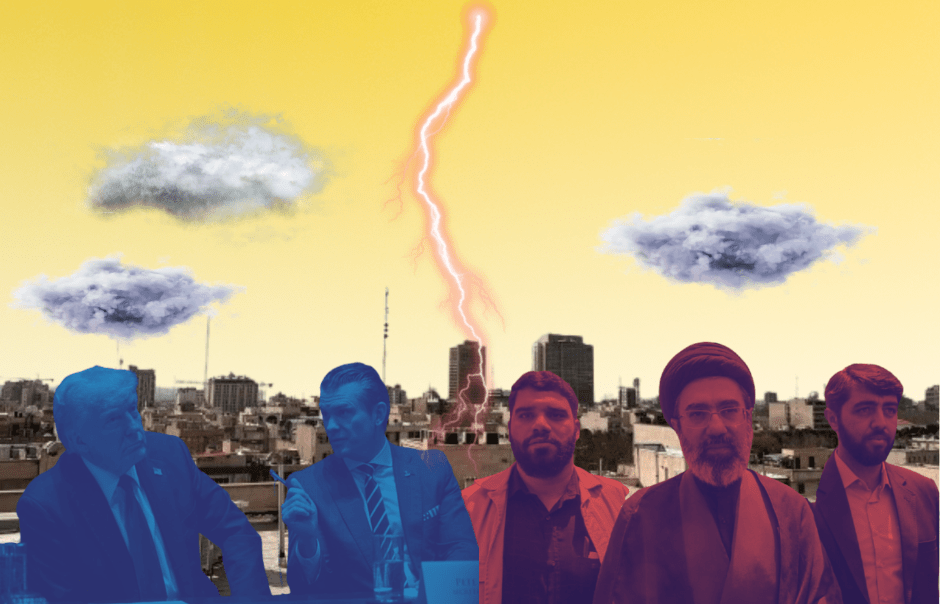
President Trump announced in the evening of Tuesday, April 7th, that a ceasefire proposed by Pakistan had been agreed to by the US and Iran. Iranian Foreign Minister Abbas Araghchi has also confirmed that Iran had agreed to the deal.
The news came just hours before President Trump’s deadline for a deal with Iran. If a deal was not reached by Tuesday night, he threatened that “one whole civilization will die tonight, never to be brought back again.”
Trump speaking on the Iranian conflict on April 6, 2026, in a briefing room at the White House.
The agreement allows vessels to pass through the Strait of Hormuz for two weeks, though their passage will be guided by the Iranian military. This could potentially ease the rising prices of oil. Iran has also put forward a ten-point plan that includes the cessation of warfare in the region, compensation to Iran for reconstruction, the return of frozen assets, and the lifting of sanctions.
Additionally, the deal is said not to include ongoing strikes in Lebanon, as Israel has stated. It has “[renewed] strikes on Wednesday in the Tyre and Nabatieh areas in the south of [Lebanon].” Trump’s press secretary, Karoline Leavitt, has confirmed Lebanon’s absence from the deal; however, the Iranian Revolutionary Guard Corps (IRGC) has promised massive responses if strikes on Lebanon continue.
However, already on Wednesday, the first day of the ceasefire, tensions have risen between the US, Israel, and Iran. An Israeli strike on Beirut, Lebanon, that killed 182 and injured 890 others, led Tehran to claim that its ten-point plan had already been violated. It also remains uncertain if the Strait of Hormuz is open or not, as Tehran and Washington give disputing accounts.
A map issued by the Iranian navy outlining lanes ships should take to cross the strait safely, as other areas have been mined.
As of April 9, traffic through the Strait of Hormuz is still virtually non-existent. Only five ships have passed through the strait in the first 24 hours of the ceasefire. Pre-war, an average of one hundred vessels crossed the strait daily. Sultan Al Jaber, chief executive of Abu Dhabi’s national oil company and a United Arab Emirates government minister, claimed that “the Strait of Hormuz is not open. Access is being restricted, conditioned, and controlled.” Frustrations continue to mount in the Gulf states, “whose economies are hugely dependent on the waterway and energy exports.”
On Saturday, senior officials from important players on either side of the war will meet in Islamabad, Pakistan, for talks that many hope will lead to the end of the conflict, which is now nearing its sixth week. Formal talks will begin Saturday morning, while Iran has suggested that talks could last as long as fifteen days.
A laborer paints curbs in Islamabad, Pakistan, in front of the Serena Hotel, the venue of the highly anticipated US-Iran talks.
From America, “US Vice President JD Vance will lead the American delegation, joined by President Donald Trump’s top envoy Steve Witkoff and son-in-law Jared Kushner,” while “Iranian Parliament Speaker Mohammad Bagher Ghalibaf and Foreign Minister Abbas Araghchi are expected to lead the Iranian delegation.” It is unclear who else may attend.
 The AAPI Angle
Leave a comment