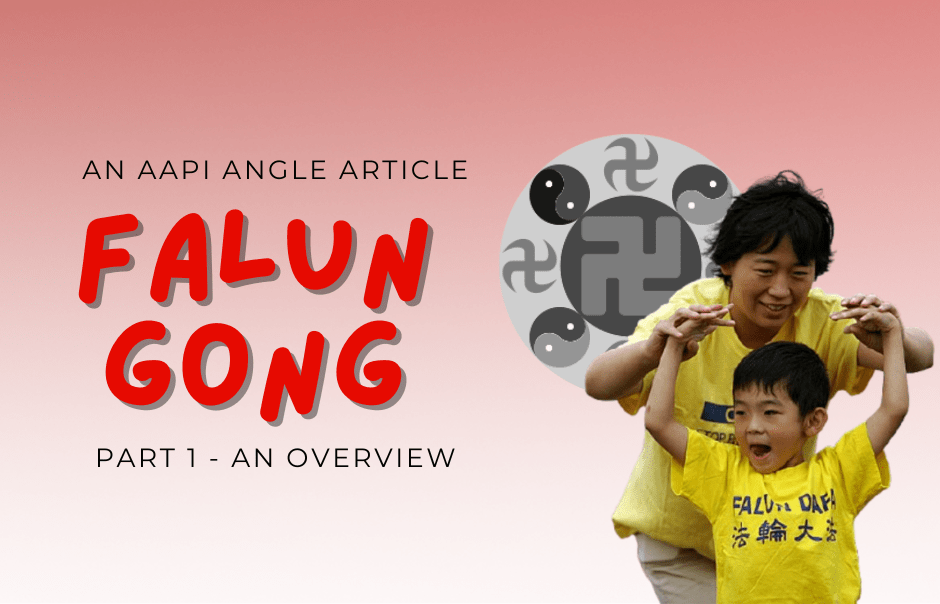
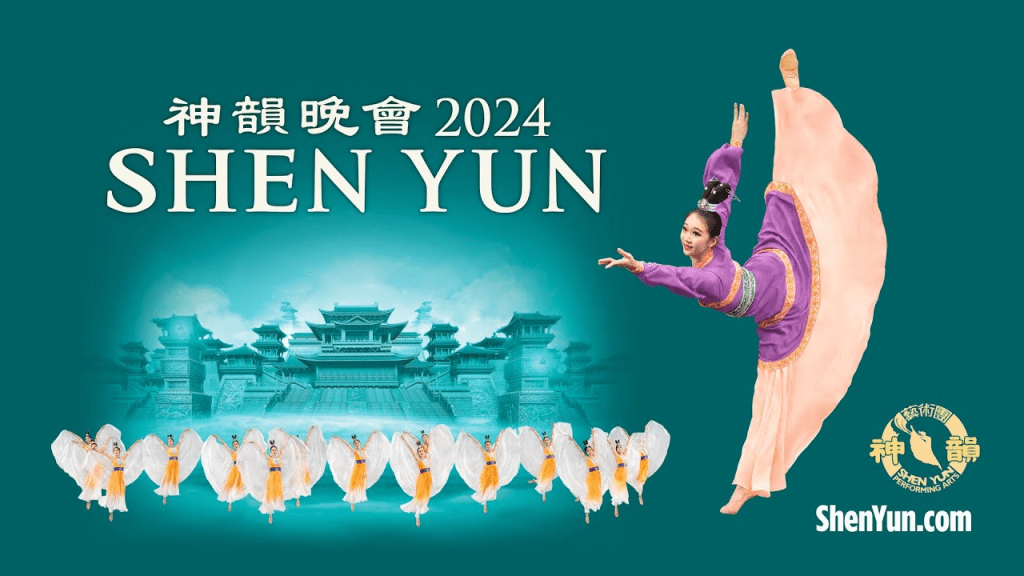
The thumbnail of the Shen Yun 2024 official trailer on YouTube.
You may have seen YouTube ads for “Shen Yun,” a dance performance that tours the world, advertising itself as “China before communism.” Shen Yun is sponsored by Falun Gong, a new religious movement that emerged in China in the 1990s.
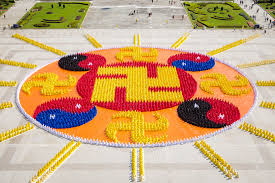
The Falun Gong’s emblem, as formed by 6000 practitioners in Taiwan.
Falun Gong is a new religious movement founded in 1992. Within a few years, relations between the Chinese government and Falun Gong deteriorated, as China “increasingly viewed Falun Gong’s growing membership as a threat,” so the practice was banned in China in 1999. After being driven out, the group established a global headquarters in a compound called “Dragon Springs” in Deerpark, New York. There are practitioners of the movement globally. Religious persecution of the Falun Gong exists in China, as practitioners have accused China of widespread and systematic persecution, including the organ harvesting of its followers. China, however, denies all of these claims.
Many critics claim that Falun Gong is a dangerous cult, and there are just as many allegations against Shen Yun. Falun Gong has aligned with right-wing, reactionary ideas in the past, as well as encouraging its followers not to seek professional medical help. Meanwhile, Shen Yun has been accused of mistreating its dancers, who are often children.

Li Hongzhi addresses practitioners at the Capital One Arena in Washington in 2018.
In general, critics say that Falun Gong is a “highly dangerous cult that has caused severe harm to individuals, families, and societies in China and elsewhere.” Li Hongzhi, the movement’s founder, claims to be a superhuman savior and “[advocates] the abandonment of modern medicine,” leading to “numerous reports of practitioners suffering from serious illnesses but refusing hospital treatment, ultimately succumbing to their conditions.” One former member even “blames the movement’s teachings on modern medicine for the death of her mother, who stopped taking her blood-pressure medication after joining Falun Gong.”
Falun Gong is also very conservative, with “clear religious reasoning against things such as racial mixing, homosexuality, evolution, and feminism.” The Epoch Times, a news outlet with ties to the Falun Gong, “caters primarily to extreme right-wing audiences who align with their heavy propaganda against the Chinese government.” Falun Gong does not believe in conventional medical treatment, as illness is instead treated as a moral failing, so members are often discouraged from seeking treatment, leading to “over 1,000 fatalities documented due to adherence to these teachings.”
Speaking to ABC News, Anna, a former member of Falun Gong, says that after she showed symptoms of anorexia at fourteen years old, her mother took her to see Hongzhi, who performed an “exorcism.” On the drive home, her mother told her, “You’re all better. You’re normal now. Now I love you.” This incident instead triggered a relapse of her eating disorder.
Her mother had gradually fallen into Falun Gong, as “she pulled Anna and her sibling out of a Catholic school and quit her job in the family business to take up selling books for Falun Gong,” devoting her time entirely to “doing exercises, meditating, and reading the movement’s teachings.” Anna’s mother encouraged her to become a dancer of Shen Yun, which she recalls as an abusive and hostile environment.
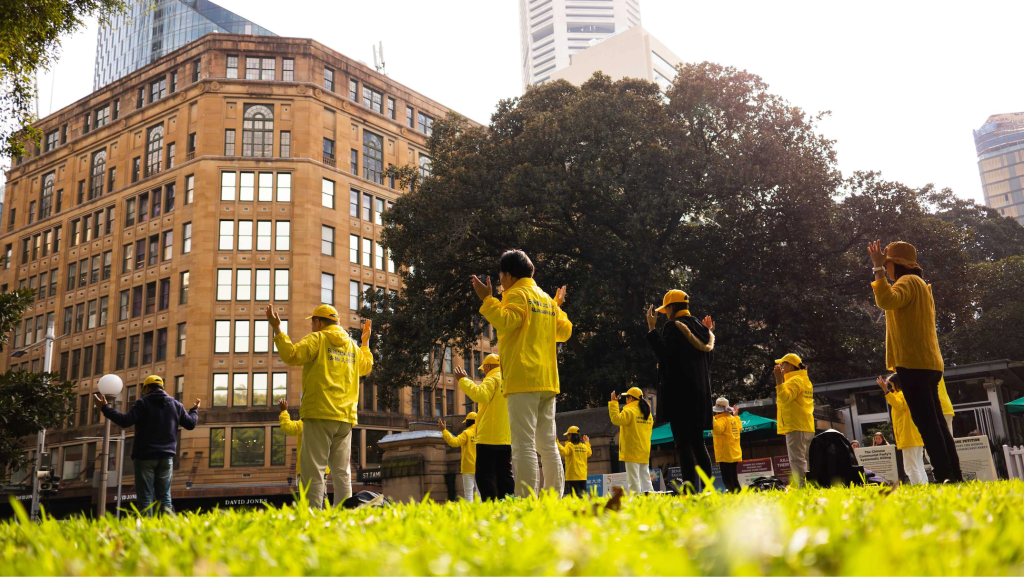
Falun Gong in a Sydney, Australia, park.
This is not the first time Shen Yun has faced controversy. In April of 2025, a lawsuit was filed in a New York court by Sun Zan, 32, and Cheng Qing Ling, 28, who “said they felt isolated from their families, too afraid to speak up and endured both physical and psychological harm.” According to the court complaint, “children as young as 13 years old worked grueling 15-hour training schedules at least six days a week, in exchange for little pay and inadequate education.”
Another lawsuit came just months before, in November of 2024, where another former dancer alleged that Shen Yun “subjected some children who perform for it to harsh conditions, including long hours for little pay.” According to the lawsuit, Shen Yun makes millions off of exploited young dancers and “forcing them to work grueling hours and scaring them into thinking they’d face harm if they quit.”
Critics of Shen Yun also say that “dancers peddle very visual—and somewhat exaggerated— […] grandiose expressions of good vs evil, where Falun Dafa is portrayed as the light which prevailed and China is portrayed as evil and wicked.” The group’s deep reach into culture and art shows how belief systems influence us. The Epoch Times, associated with Falun Gong, often publishes reviews of Shen Yun and one writer “described sending righteous thoughts as a duty linked to the success of Shen Yun performances.”
These are the main criticisms of Falun Gong and its associated groups. The new religious movement is banned in China and faces immense persecution, and thus it has moved abroad, with a headquarters in New York State. In the next article in this series, we will explore the movement’s objective reality, the persecution it faces, and its potential positive aspects.
 The AAPI Angle
Leave a comment