
This article is part of a larger series focusing on the current civil war in Myanmar, its effect on the long-fragmented country, and the greater ramifications of the conflict.
Introduction
The world has been aflame with conflicts these few years. From the high-stakes war in Ukraine to the violent struggle between Iran and the United States, every day soldiers wake up, fight, and die for causes they believe in.
However, one conflict that is frequently overlooked, yet equally important, is the civil war in Myanmar. With its ethnic and linguistic diversity, Myanmar has historically been a tinderbox for complicated multi-side wars, and this one is no exception. So, what are the sides in this complicated struggle? What are their goals and ideologies? Let us find out.
The Tatmadaw
The combined military force of Myanmar, which includes the Army, Navy, and Air Force, the Tatmadaw (or “armed forces” in Burmese) has held a large amount of control over the country’s politics and operations since overthrowing the nation’s civilian government in a 1962 coup.
However, in the context of the current civil war, much of the widespread fighting has been due to the Tatmadaw’s actions in recent years. After the results of the Myanmar 2020 general election, which saw the pro-democracy National League for Democracy win in a landslide, the Tatmadaw baselessly claimed that the elections were rigged, further accusing that electoral fraud was widespread in all parts of the country.

A group of Tatmadaw soldiers, including Lieutenant-General Nain Naing Oo, testing out drone technology. Despite lacking popular support, the Tatmadaw has robust access to foreign equipment due to historical ties. Source: Telegram/SAC-STR
A year later, the Tatmadaw escalated its strategy from questioning the results of the election to openly using force. On February 1, 2021, members of the Tatmadaw deposed elected members of the National League for Democracy, established an authoritarian military junta, and proclaimed a state of emergency. This harsh response led to widespread protests in the country and the formation of armed anti-Tatmadaw forces, which eventually escalated into the current civil war.
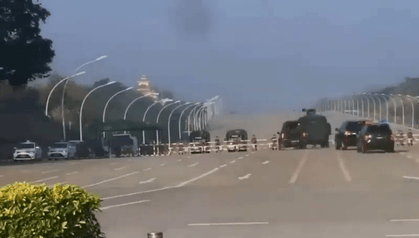
Military and police vehicles on their way to enter the Burmese presidential building during the Tatmadaw coup d’état in 2021. Source: BBC News
Five years later, despite losing large swaths of the country to rebel forces, the Tatmadaw remains robust in Myanmar. This is largely brought on by a variety of factors. For one, the military still maintains control over major conglomerates that control stakes in banking, mining, tourism and manufacturing, allowing them to draw in consistent revenue.
However, a major component of the Tatmadaw’s resilience also lies in foreign support, especially from powers like Russia and China. With China relying on a strong and stable partner in Myanmar to secure its resources and Russia viewing the country’s civil war as a way to expand global reach, the Tatmadaw imports weapons, fighter jets, and machine guns from a variety of Asian countries.
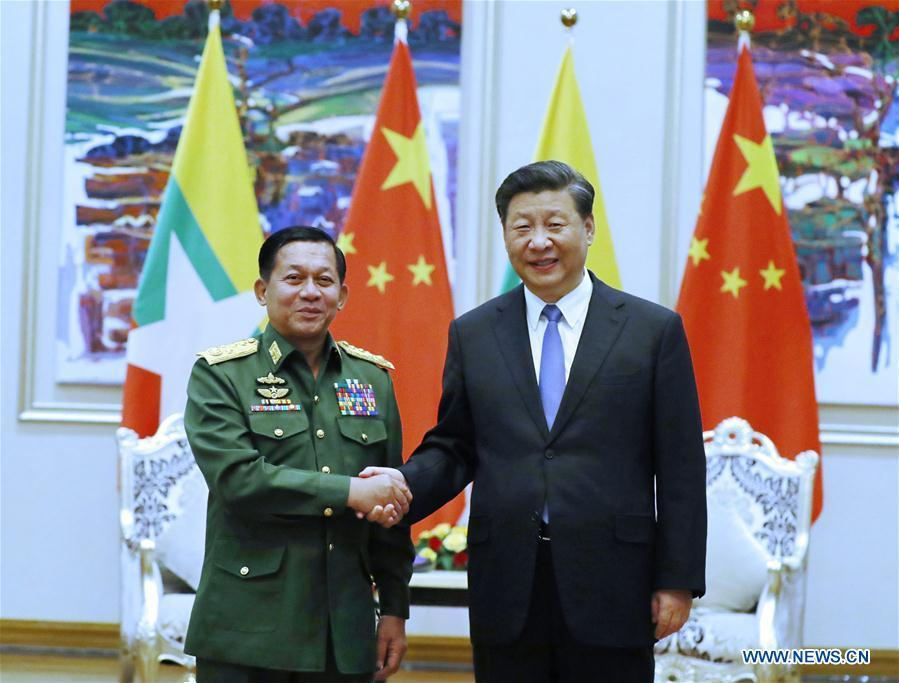
President Xi Jinping meeting with Tatmadaw commander-in-chief Min Aung Hlaing in Myanmar. China has served as a key backer of the military junta, supplying it with weapons. Source: China Daily
However, this does not mean that the Tatmadaw lacks enemies. Following the February 2021 military coup that overthrew the elected government, ousted lawmakers established the civilian National Unity Government. Subsequently, the People’s Defense Force was formed, serving as the armed wing of the NUG and one of the Tatmadaw’s greatest state enemies in the civil war.
The People’s Defense Force
While the Tatmadaw has been an established part of Myanmar’s politics and government since its creation upon the independence of the country, the People’s Defense Force, created on May 5, 2021, is much newer.
Following the fallout of the Tatmadaw coup, Burmese citizens disgruntled with the military junta fled to the country’s remote border, where many received military training from the country’s many ethnic armed groups.
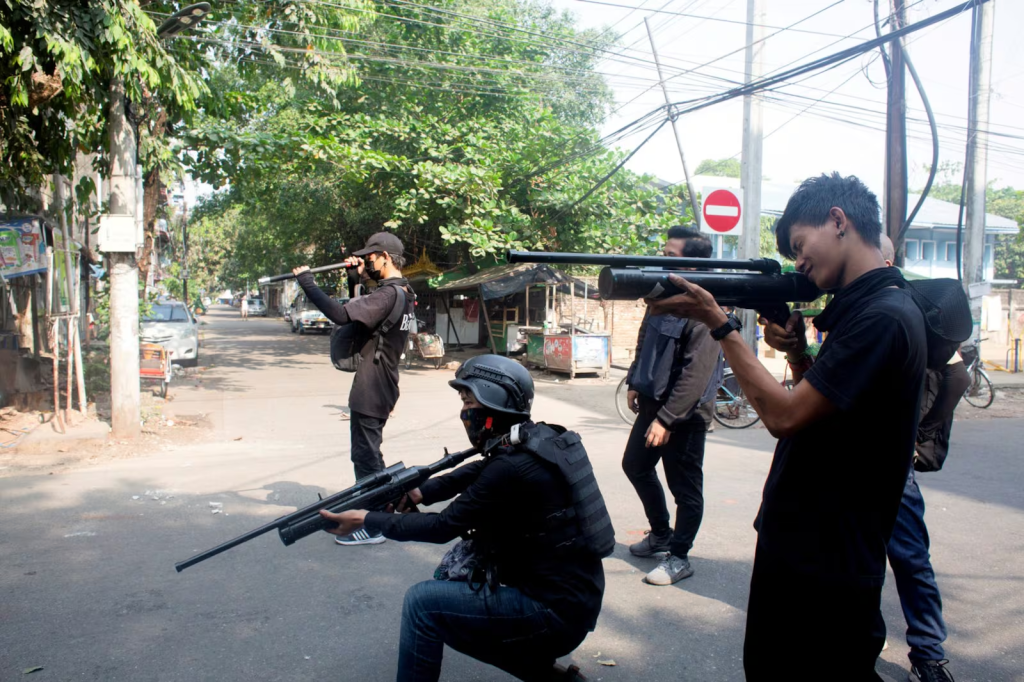
Protesters holding homemade pipe air guns during an anti-junta protest in Yangon. Many protesters went on to join the People’s Defense Force, seeking to overthrow the Tatmadaw. Source: Reuters
Aiming to democratize Myanmar and establish a civilian government, the People’s Defense Force has an estimated size of 200,000 members, and currently fully control around 16% of the country’s townships. They have seen the most success along the country’s border, where the Tatmadaw has historically faced challenges extending military rule: there, PDF-allied control extends to numerous trade towns.
However, the People’s Defense Force has faced difficulty in recent months holding territory they previously captured, due to a mix of a resurgent Tatmadaw, foreign pressure, and poor supply. Many of the ethnic armed groups the PDF allies with have seen much of their territory taken recently, including settlements like Kyaukme, Mogok, and Mongmit.

Leave a Reply