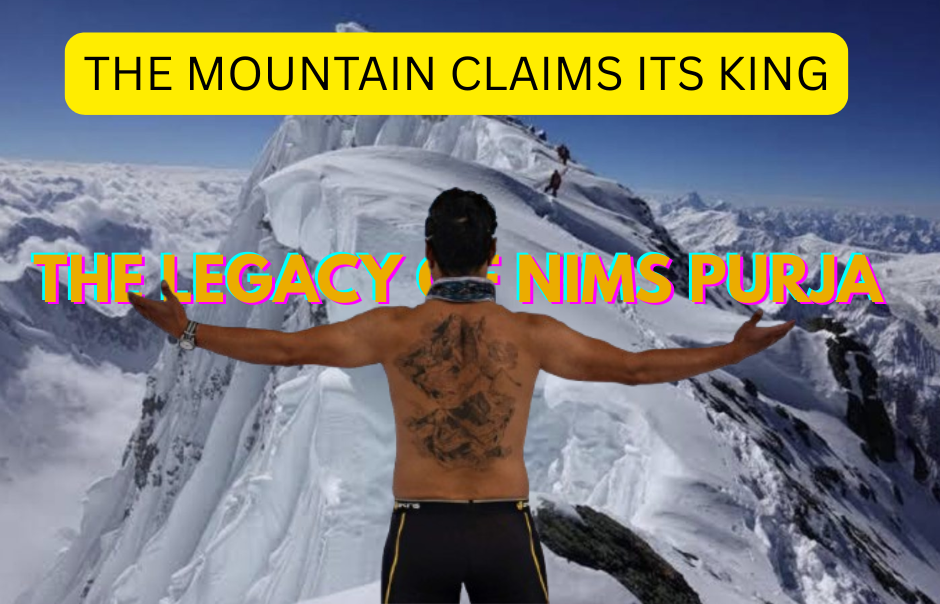
There is only one absolute rule in mountaineering: “Always come home.” To the experienced men and women who take on the world’s paramount peaks, the summit is always optional—but returning to their families is non-negotiable. Yet, being thousands of meters above sea level in the frigid cold always presents uncontrollables, and it was one of those uncontrollables, a torrid avalanche, that took the life of one of climbing’s best, Nirmal “Nims” Purja.
At the time of his death on July 30th, 2026, Purja, along with a group of nine others, had been attempting to summit the 12th-highest mountain in the world, Broad Peak, at 8,051 meters (26,414 feet) above sea level. The mountain, located in the Karakoram range between the border of Pakistan and Xinjiang, China, is known for its avalanche risks but, according to mountaineer and blogger Alan Arnette, is still considered “easy in the sense that there is almost no technical climbing” when compared to other 8,000-meter mountains.
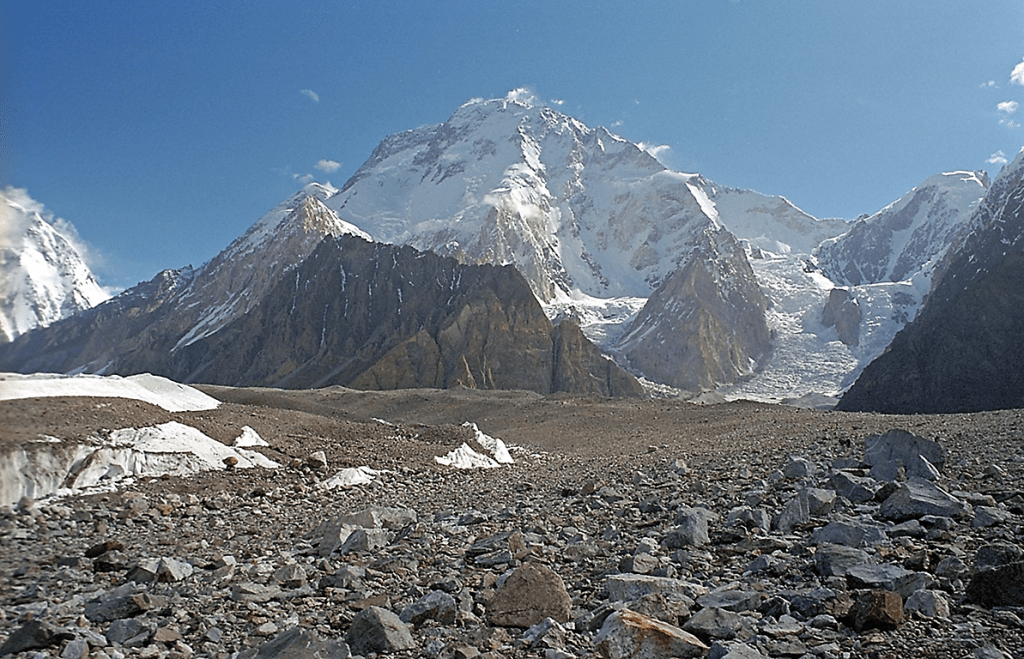
Broad Peak, as viewed from the Concordia camp in the Karakoram range between Pakistan and China. Source: Wikimedia

Nonetheless, it had been a tumultuous summer season throughout the peaks of the Karakoram range. According to the Pakistani newspaper Dawn, “climate change-induced shifts in weather patterns have worsened conditions” in the range’s mountains, which include K2, the world’s second-highest mountain at 8,611 meters (28,251 feet). In fact, no climber had managed to summit K2 and another peak in the range, Gasherbrum-I, while another forty climbers had failed to reach the top of the mountains Gasherbrum-II, Broad Peak, and Nanga Parbat.
Purja, a Nepali, was born in Nepal’s Dhaulagiri region and grew up in the country’s flatlands. Like his father and brothers, Purja yearned to be a Gurkha, a Nepali soldier serving in a foreign regiment—in his case, the British military.
Purja’s military career kick-started in the 1st Battalion of the Royal Gurkha Rifles in 2003, and he was later deployed to Afghanistan. Following a six-year stint with the Royal Gurkha Rifles, he joined the highly-demanding and elite Special Boat Service of the Royal Navy in 2009. Due to his service in the British military, Purja obtained British citizenship.
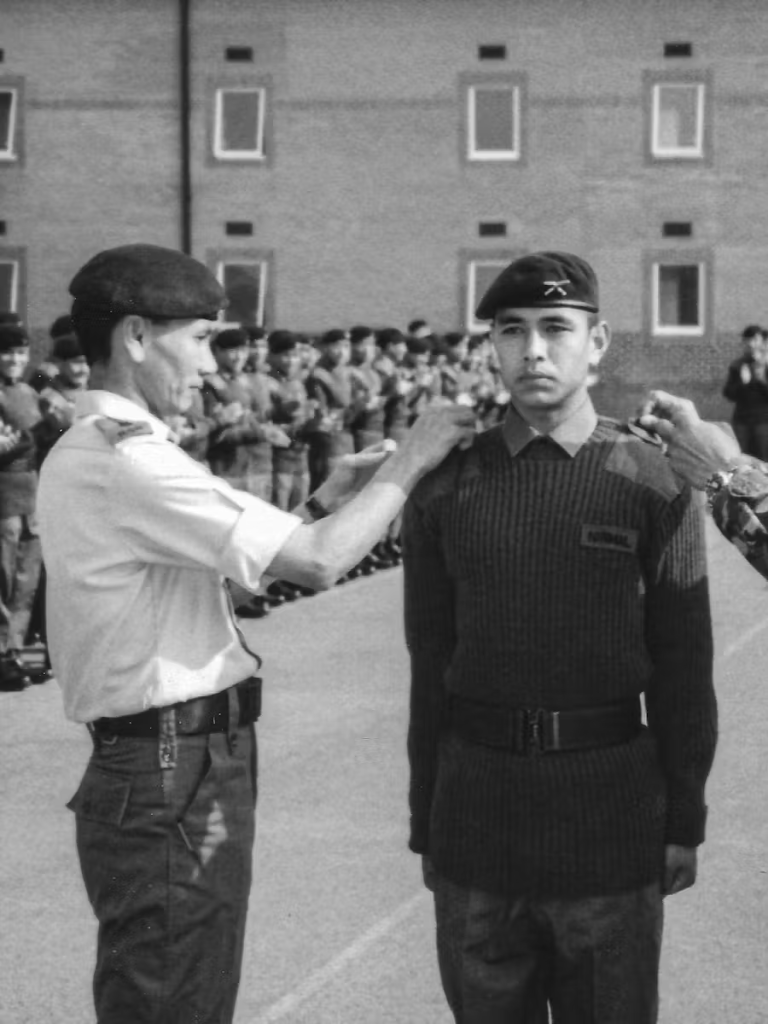
An 18-year-old Nims Purja joining the Gurkhas in 2003. Source: Nims Purja’s Website
Despite having been shot by a Taliban operative in the neck during his service, Purja did not quake in the face of danger, and in fact, embraced it throughout his mountaineering career. Perhaps most well-known of his various feats was his Project Possible 14/7, in which he successfully summited the world’s fourteen 8,000-meter mountains (which included Broad Peak, the peak he would later perish on), in under seven months—to be exact, six months and six days.
Shattering the previous record for conquering the 8,000-meter peaks, which was set by South Korean Kim Chang-ho in 2013 at seven years, ten months, and six days, Project Possible was also the subject of the Netflix documentary 14 Peaks: Nothing is Impossible. Purja was also part of the ten-man team that completed the first winter ascent of K2 in January 2021, and he was the only mountaineer to do so without supplemental oxygen.
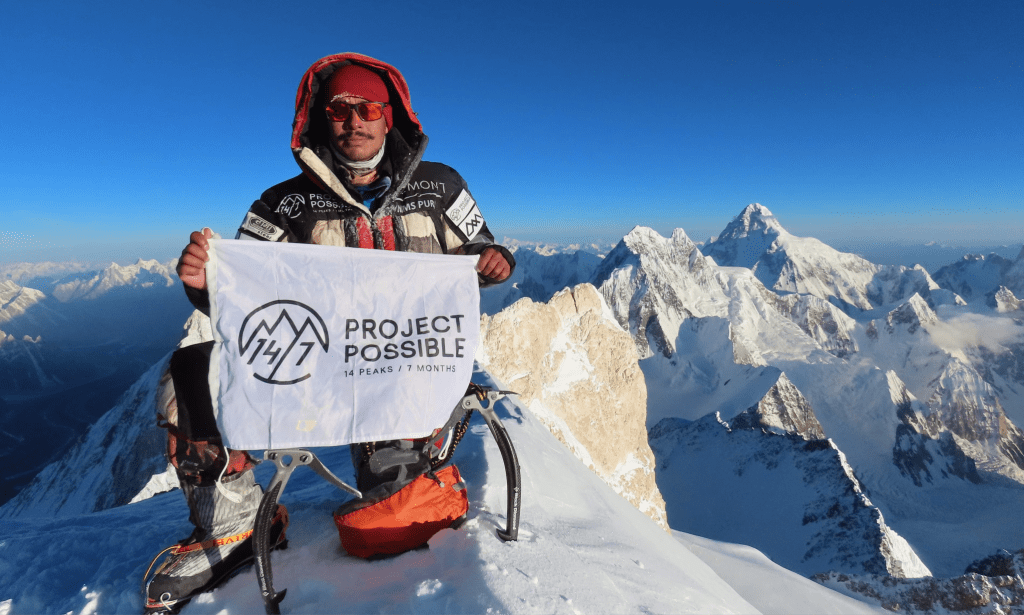
Purja at the summit of Gasherbrum-II on October 29, 2019, after completing his final peak in his “Project Possible.” Source: Bremont Pr/AFP via Getty Images
Even with all his experience, Purja understood that neither the mountains nor his own ambition could ever be completely controlled. In fact, Purja had not originally intended to climb Broad Peak in the summer of 2026. In his last X post, Purja wrote that his plan was originally to climb just Gasherbrum-II, but he realized that if he were to summit Broad Peak, only the mountain Cho Oyu would stand in his way of becoming the first person in history to climb all 8,000-meter mountains without oxygen twice.
But Purja’s most poignant words came later in the post, when he said: “Broad Peak, I ask for nothing but safe passage up and back down. I take zero mountains for granted. Not one. The moment my foot leaves basecamp, it’s 100%. Always has been. Always will be.”
For someone who had spent his life pursuing the extraordinary and the insane, Purja’s final words etched on the Internet were remarkably simple. He did not ask Broad Peak for another record, for another achievement, or another recognition of glory. He only asked it to allow him to make the journey and follow the only absolute rule—to return home.
That request ultimately went unanswered as the mountains finally claimed their king. Perhaps that is what makes Purja’s story so compelling: because of the records he set, the barriers he broke, and the attention he brought to Nepalese mountaineering, his legacy will reach far beyond the summit he never returned from.
Leave a Reply