
As July 2026 came to an end, the United States made a historical intervention to help the plummeting value of the Japanese yen.
The yen dropped to a 40-year low compared to the US dollar in early July. Earlier, the Japanese government tried to prop up the yen, but failed to halt the backslide.
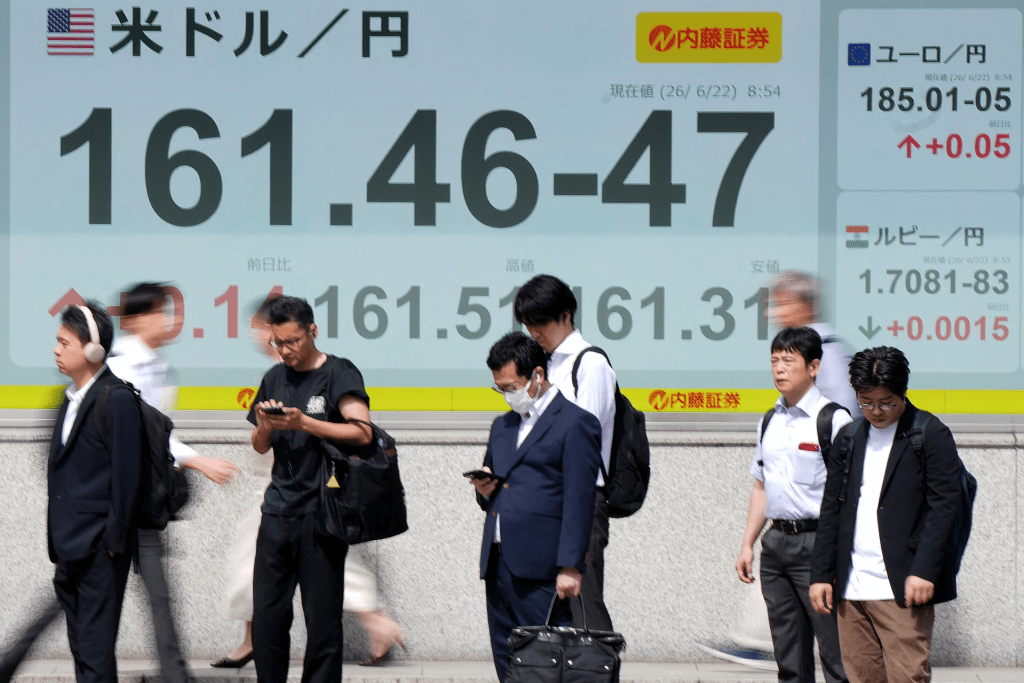
Pedestrians in front of a board displaying currency exchange rates on a street in Tokyo in late June—source: Council on Foreign Relations.
Japan “has been struggling to stop an accelerating slide in the yen, which has been piling pressure on its already flailing economy.” It relies on imports for food and energy, and its weak currency makes imports more expensive. Since 2022, Japan has spent billions of dollars “trying to limit the yen’s decline – but the currency has continued to hit new lows.” Hit hard by the slowdown of oil from the Middle East due to recent conflicts, government debt, low interest rates set by the Bank of Japan, among other reasons, have resulted in a sharp deterioration of the yen.
The state of the yen has been an issue for a long time. In an article from December of 2025, Reuters states that “yen has weakened significantly against the dollar.” At the time of writing of that article, the cross rate between USD and JPY sat at 155, at the higher end of the multi-decade range of 80 to 160. Despite other national banks raising interest rates to combat inflation, “the Bank of Japan kept its policy rate negative.”

The foreign exchange rate of yen against the US dollar at a brokerage in Tokyo on June 30, 2026. Source: CNN.
The US Federal Reserve “will likely hold rates steady, or even increase them, in the coming months, to combat inflation” brought on by conflict in the Middle East. Thus, the dollar has strengthened, putting pressure on the yen, as “currencies typically rise and fall based on differences in interest rates in different countries.”
Meanwhile, Japan has historically had low interest rates “to try and juice the economy and prevent deflation after the country’s economy went into a severe recession in the 1990s.” In 2024, the BOJ slowly raised interest rates as inflation increased, but the yen continued to decline. This will likely lead to an increase in imported food and energy, making an existing cost of living crisis worse.
On July 31st, the US Treasury intervened. Acting on behalf of the Treasury, “The Federal Reserve Bank of New York sold euros and bought yen on the Treasury’s behalf.” The intervention matters, since Japan is “an important financier of both Asian industrial development and Western financial markets.” At the same time, “Japan’s Ministry of Finance had sold an estimated $85 billion of U.S. dollars to buy yen on July 30 and 31.” The US part of the intervention was much smaller, but “pushed the yen further by signaling the US’ willingness to help.”
“Japan’s been very good to us, with the exception, of course, of Pearl Harbor,” President Trump said on August 2nd as he confirmed that the US had bought billions of dollars worth of yen. He also suggested that the intervention would benefit the global economy. However, Washington has its own interests in the yen’s crisis.

The leaders of Japan and the US appeared together in a speech last year. Source: The Guardian.
Washington’s involvement was likely “aimed at limiting volatility in US markets.” To free up money to buy yen, Japan has been selling US government bonds, which many foreign governments own to store national wealth. But when government bonds are sold in large quantities, there can be “a rise in the interest the US Treasury pays on its debt.” The intervention could be an attempt to control the amount of bonds Japan sells.
Interestingly, some Japanese investors have taken the situation in stride. “Japanese investors net bought more than 5 trillion yen of foreign equities and long-term bonds over the two weeks ended Aug. 15,” compared to a volume of 300 billion in the weeks before that. Investors took advantage of the joint intervention to “snap up overseas assets at more favorable exchange rates.”
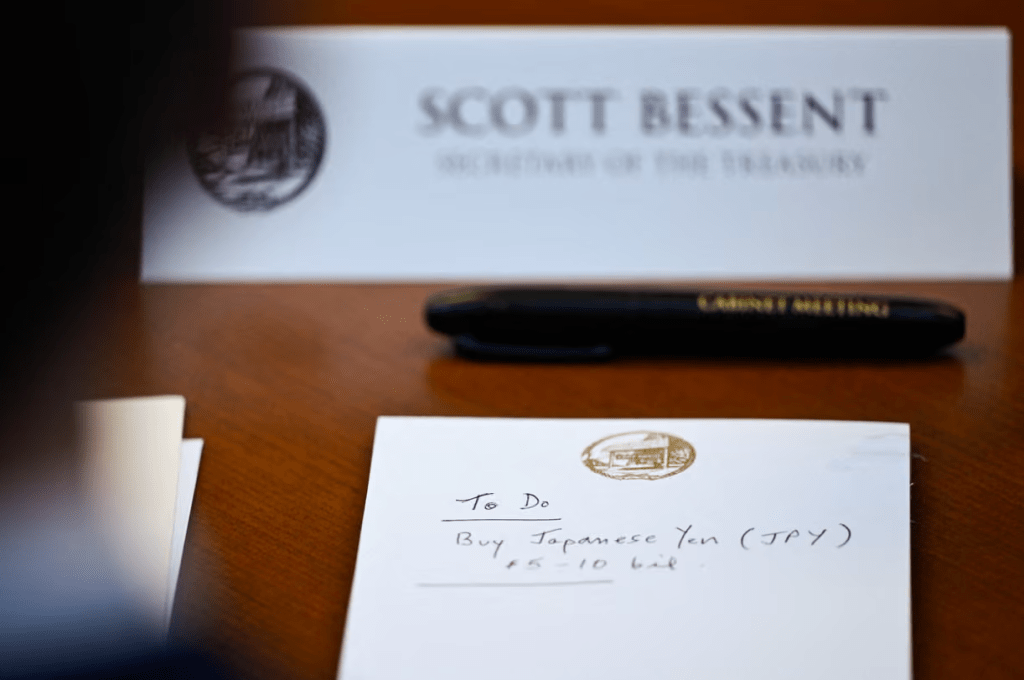
A notepad in front of Scott Bessent, the US Treasury Secretary during a cabinet meeting in late July. Source: The Guardian.
But would the temporary solution hold?
The yen briefly halted its slide. But by the 19th of August, not even three weeks later, the yen had reversed many gains and was “once again approaching the 160 per US dollar threshold.” The interest rate gap between the yen and the dollar that caused the crisis in part has not yet been resolved. US borrowing costs are going up as Treasury yields rise, so “a persistent US-Japan interest rate gap [is] more likely.”
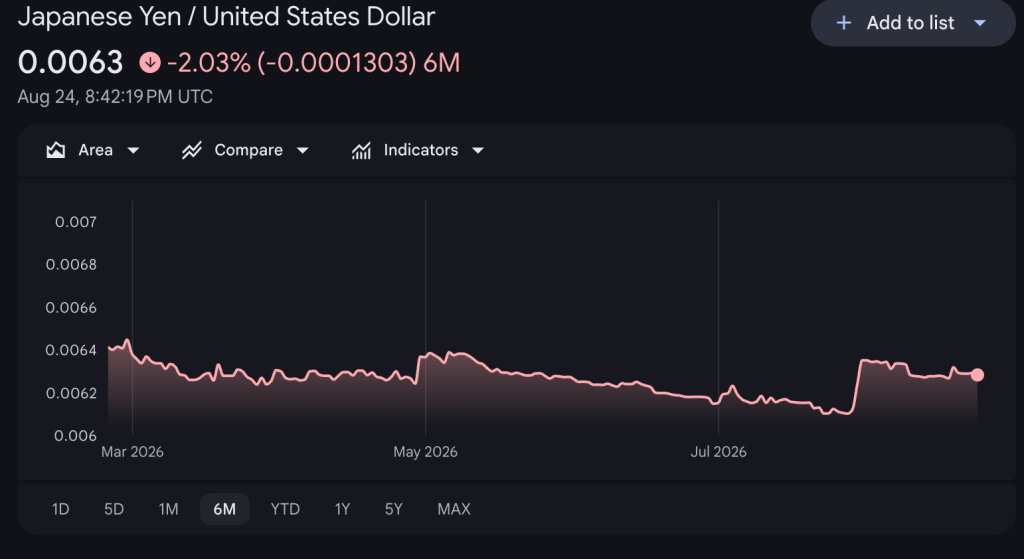
Despite a sharp rise at the end of July, the yen’s value is declining once again, echoing the downward trend of the last several years. Source: Google Finance.
Experts still agree that domestic growth is needed to permanently stabilize the yen, rather than foreign interventions. The current average growth is better than in past months, but it is “still significantly lower than before the Gulf conflict pushed up oil prices.” There is a need for “a more convincing improvement in Japan’s growth outlook before expecting a sustained JPY rebound.”
Leave a Reply