
For decades, the United States has been laser-focused on East and Southeast Asia. This includes a range of both economic and military commitments – after the destruction of World War 2, the US worked closely with new Asian allies like Japan, South Korea, and the Philippines to rebuild their shattered economies. Militarily, the U.S. stepped up for the defense of said allies, signing a variety of bilateral agreements to protect their fledgling governments from enemy aggression.

A U.S. Marine in occupied Japan. American troops were instrumental in the defense and reconstruction of Japan, an Axis member that surrendered to the United States and other Allied powers in 1945. Source: National Archives
This consensus – that the U.S. would serve as a strong and reliable protector for its allies – persisted from administration to administration for years. Yet, under the second presidency of Donald Trump, America’s old partnerships have frayed at the seams. Deriding the U.S.’s Asian allies for what he calls overreliance on the American military and an alleged refusal to help with the war in Iran, Trump has bullied America’s traditional allies and praised its enemies. This strain is nowhere more apparent than in the administration’s approach towards South Korea.
Ever since the Korean War, where a U.S.-led U.N. coalition helped repel North Korean advances along the peninsula, the United States has been actively involved in a multitude of training exercises with South Korea. This includes the “Twin Dragons” amphibious landing exercise, where American and Korean marines storm a sandy beach on the southeastern coast of South Korea, Ulchi Freedom Shield, an annual military exercise designed to help counter threats from the north, and Exercise Freedom Flag, an air exercise that improves Korean-American air combat readiness and interoperability.
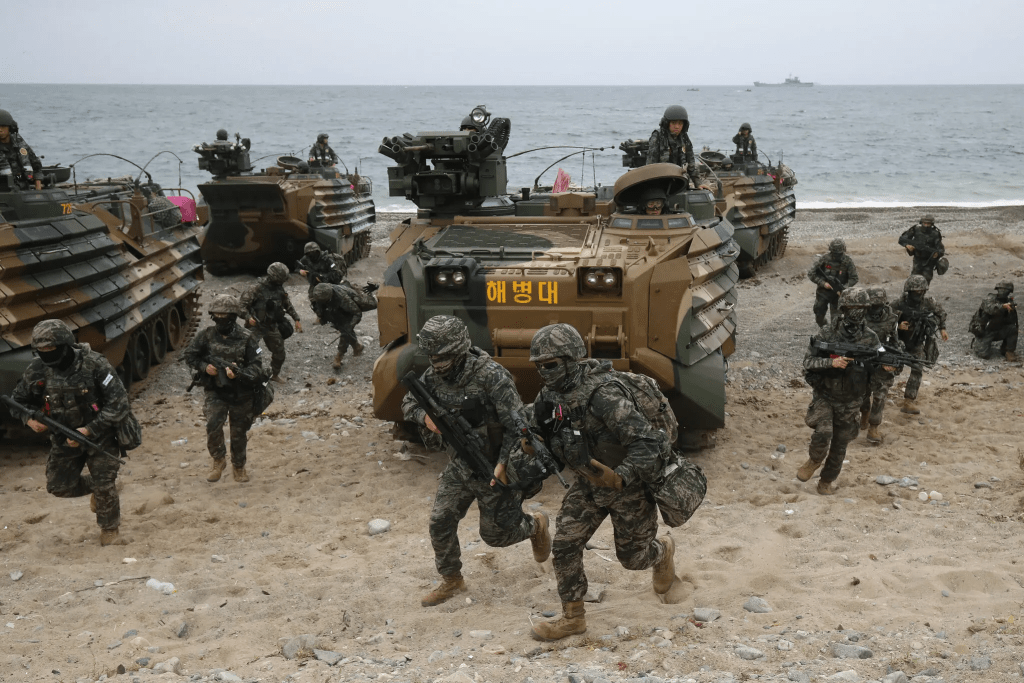
South Korean marines participating in the joint U.S.-Korean “Twin Dragons” exercise in 2024. Source: Chung Sung-Jun/Getty Images
Now, many of these programs have come under fire with an administration that cares little about maintaining America’s traditional alliances. Citing resource constraints driven by the war in Iran and the broader Middle East, “Twin Dragons” was cancelled today. Meanwhile, Ulchi Freedom Shield was shortened dramatically from the planned 11 days to only five earlier this month, with Trump criticizing the drill as “costly” and sending “a signal that is totally inappropriate and hostile” to North Korea.
These changes come amid a broader realignment of American foreign policy to a transactional, “might makes right” strategy that has plunged allies’ confidence in the United States. Polling from Pew Research finds that whereas favorable views in the U.S. remained relatively high throughout the 2010s and early 2020s, they have now drastically soured to a point where 55% of South Koreans polled in 2026 expressed an unfavorable opinion of America.
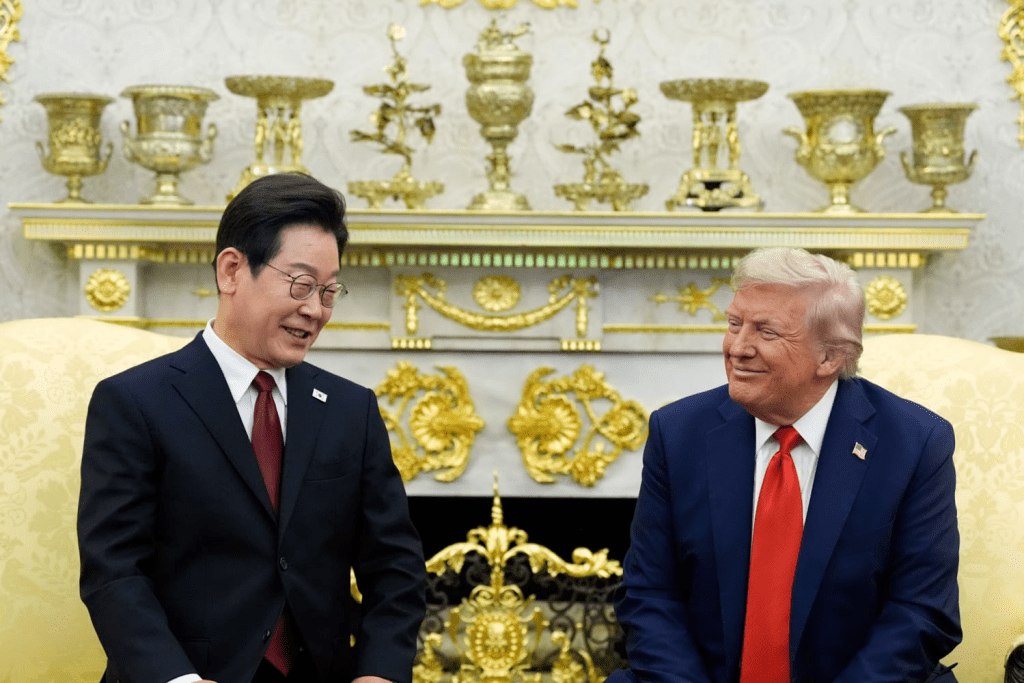
Korean President Lee Jae Myung meeting with President Donald Trump in the Oval Office. Source: Alex Brandon / AP
Similar trends can be seen in other Asian countries – once overwhelmingly supportive of American policy, 74% of Japanese and 82% of Australians now have no confidence in the Trump administration doing the right thing in world affairs. As Trump pivots the U.S. towards transactional diplomacy and warms up to traditional enemies like North Korea, South Korea and other allies have lost confidence in the U.S.’s ability to act in their best interest.
Yet, it seems as if America’s allies cannot escape her shadow entirely. Even with declining views of the U.S., 84% of surveyed South Koreans still named the superpower as their country’s most important ally, showing the U.S.’s continued importance in protecting South Korea from its hostile northern neighbor. This shows the uneasy balance that America’s Asian allies are attempting to maintain – trying to placate Trump enough so that they can continue benefiting from the U.S.’s powerful military and protection, while simultaneously asserting themselves and building up their countries’ own armies.
Leave a Reply