
In the past week, one might have seen a CGI image of a yellow cow on one’s social media feed. With its wide mouth and sculpted eyebrows, the cow certainly looks “unique,” but it is precisely this animation that has captured the wallets of so many Chinese moviegoers.
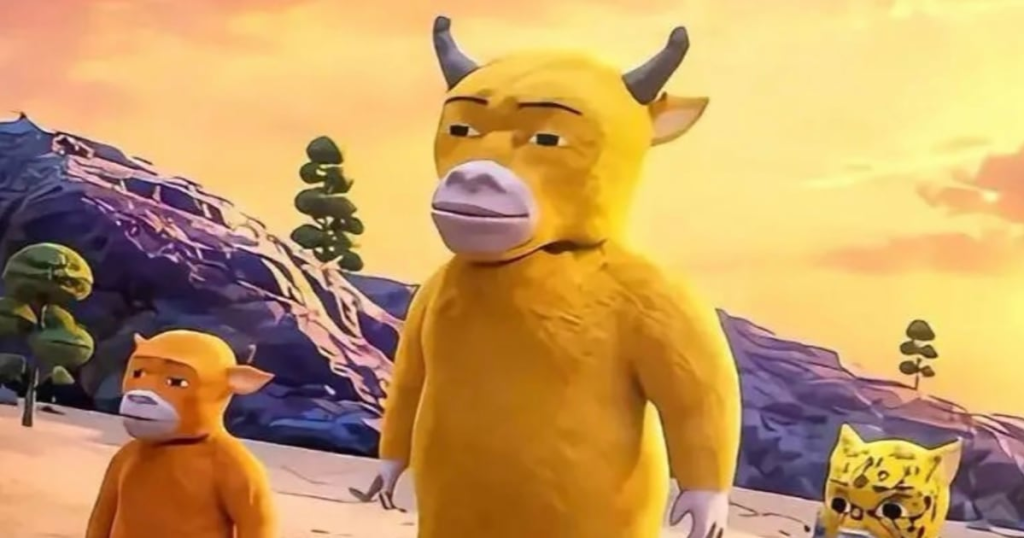
Meet Niu Lai, the protagonist of the eponymous movie Niu Lai (《牛来》). The movie’s summary on IMDb states that it is an “adventure about a young cow named Niu Lai growing up to be a warrior.”
Since its release in mainland China on August 5, Niu Lai has broken box office records to become the most profitable movie of all time, surpassing Obsession, the horror movie released less than one year prior. Reportedly created on a budget of just $200 USD, the movie was hand-animated over five years by the director, Xin Yumeng, and his mother, Sun Lifan — even Niu Lai’s theme song was sung by Sun Lifan.
In the first week after its release, the movie performed terribly, earning only $1,145 USD with fewer than 300 tickets sold. In the competitive summer movie season, these numbers were terrible. Yet, on the Monday after its release, Niu Lai’s box office surged to $1.2 million USD, and its total box office has surpassed $7 million USD.
Niu Lai had almost no promotional budget, with a single ink-wash movie poster posted on social media. Precisely because the movie received so much ridicule from its audience, many viewers were attracted to the theaters out of curiosity. “[Niu Lai] is unbelievably terrible and eye-opening,” stated one viewer on Douban, a Chinese movie review platform. Another viewer posted sarcastically: “Awesome and highly recommended.”

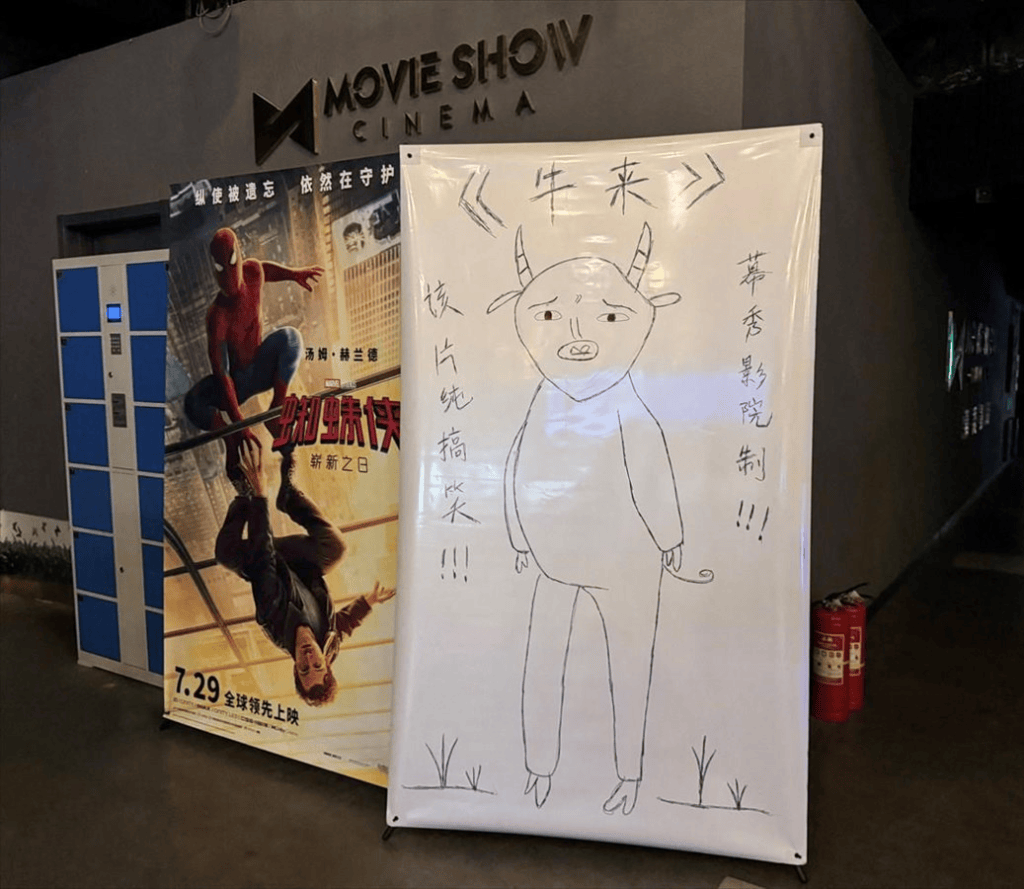
The movie’s true animation style is a far cry from the one depicted in the poster, creating a jarring contrast between expectations and reality. In fact, because the movie had limited resources and did not provide theaters with posters, some theaters began creating hand-drawn posters for the movie. Combined with the negative reviews, low box office numbers, and rough animation, the new posters only fueled the social media craze, becoming a hot topic in their own right.
Niu Lai is peppered with awkward transitions, low-detail shots, and stiff movements. In one especially memorable scene, the Chinese character for “grass” appeared on an otherwise empty field. One review summarizes the sentiments of many who chose to watch Niu Lai: “You’ll regret watching it for 86 minutes, but you’ll regret not watching it for a lifetime.”
While these factors all contributed to the hype, moviegoers also considered the storyline. Despite the memes, the film’s plot is surprisingly wholesome: it follows a young calf, Niu Lai, as he faces threats and adventures, which are later revealed to be part of a dream. He grows from a child to an adult and leader capable of taking responsibility.
With the movie’s five-year production timeline, director Xin Yumeng began creating Niu Lai before the advent of widely available generative AI models like ChatGPT. Notably, Xin said that he “did not use generative AI anywhere in the production.”
The “mistakes” in the movie corroborate this statement, creating something demonstrably and preciously human about Niu Lai and the other characters in the movie. With this new perspective, the movie’s low quality takes on a different meaning.
Especially in an era where the internet is filled with “AI slop” — AI-generated content that is perceived as lacking in effort, quality, or meaning — Niu Lai stands out in its “clumsy sincerity,” in the words of one Chinese blogger.
“I love the animation, it’s so cute,” said Charmaine, a high schooler from Hong Kong. Charmaine learned about Niu Lai on Instagram and became curious, which led her to watch the movie. “I would say there isn’t a set plot,” she said. “It’s just a very chaotic storyline that is somehow abstract,” comparing Niu Lai to Backrooms, a 2026 American horror movie.
Of course, while there are those who watched the movie for hype, genuinely enjoyed the story, or resonated with the efforts of the mother and son behind the film, not everyone felt positively about Niu Lai.
One Beijing News article takes a critical stance on Niu Lai, stating that bad films have been repeatedly “misleading audiences into paying” and that Niu Lai has lowered the entry barrier for commercial films to enter theaters, stating that the cinema industry needs to “start focusing on building quality evaluation systems.”
It is also worth noting that Niu Lai was in theaters at the same time as Chinese and international blockbusters, among which include The Odyssey, Spider-Man: Brand New Day, and Once Upon a Time in the Middle East (《欢迎来龙餐馆》). Some commentators have worried that prolonging Niu Lai’s time in the theaters may have been a case of promoting viral curiosity at the expense of better-made productions.
Either way, Niu Lai’s box office results make it clear that the film has been recognized by the masses. Its success was a surprise, and nearly impossible to replicate. One American resident even started a Change.org petition to bring Niu Lai overseas.
“[Niu Lai] changed my life. Actually, it did not since I have not seen Niu Lai yet, but if I watched Niu Lai it would change my life, so please bring Niu Lai to US theaters,” wrote one supporter of the petition.

Leave a Reply