
On September 24, two world leaders on opposite sides of a long-standing conflict delivered speeches to remarkably different reactions before the United Nations General Assembly in New York.
Almost three years have passed since the October 7 incident that continued to stoke the decades-long Israeli-Palestinian conflict. The leaders of Israel and Palestine, Prime Minister Benjamin Netanyahu and President Mahmoud Abbas, respectively, both addressed the 81st session’s high-level General Debate.
General Debate at the United Nations occurs once a year and is the opportunity for various countries’ Heads of State and Government to gather at UN headquarters to discuss critical issues. This year’s iteration of General Debate took place between September 22 and September 28, and its theme was “Restoring trust, managing transformation: a United Nations that delivers for all.”
In terms of speaking order, both Netanyahu and Abbas delivered their remarks in the morning session of September 24. Abbas, representing Palestine, spoke fourth, while Netanyahu, representing Israel, spoke 16th.
For the second year in a row, Abbas spoke in front of the General Assembly through a prerecorded video message after the United States denied visas to the Palestinian delegation. Upon the end of his speech, a rousing round of applause broke out.
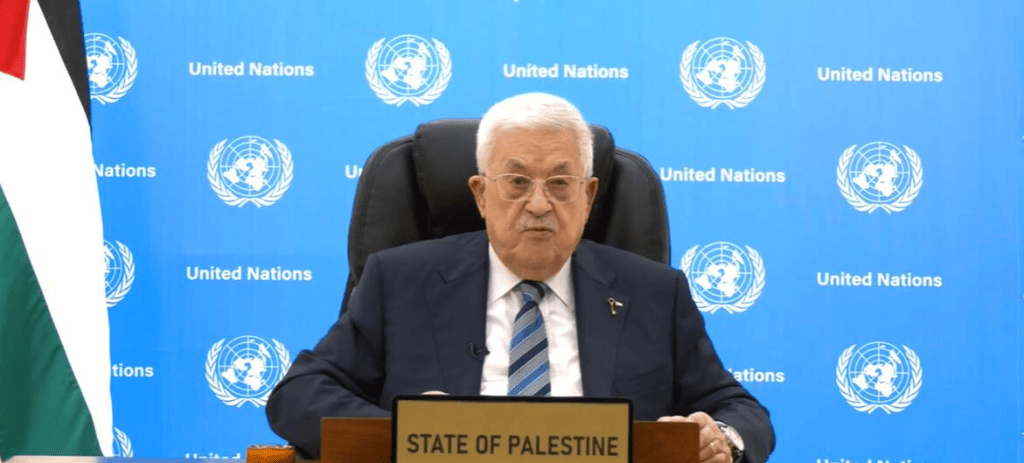
Palestinian President Mahmoud Abbas delivering prerecorded remarks in front of the UN on Sept. 24, 2026. Source: UN Photo
Specifically regarding the content of his speech, Abbas declared that Israel’s policies in the status quo have gone far beyond contradicting a two-state solution and have reached a point that threatens the “very life and existence of Palestinians.”
Abbas also iterated that Israeli military forces were erasing Palestinian lives. He stated that “[they have] destroyed neighborhoods, cities, camps, institutions, schools, universities, hospitals,” as well as “mosques and churches.” Furthermore, he pronounced that the military “has targeted all the basic necessities of life and the future of entire generations.”
On the other hand, Netanyahu’s presence at the General Assembly drew ire from delegations of multiple nations. As Netanyahu appeared on the podium, dozens of UN envoys walked out of the hall in protest of the Prime Minister. Representatives from numerous nations, including Middle Eastern allies of Palestine such as Iran, Qatar, and the United Arab Emirates, as well as less expected allies such as the Bahamas, Spain, and Madagascar, all participated in the walkout.
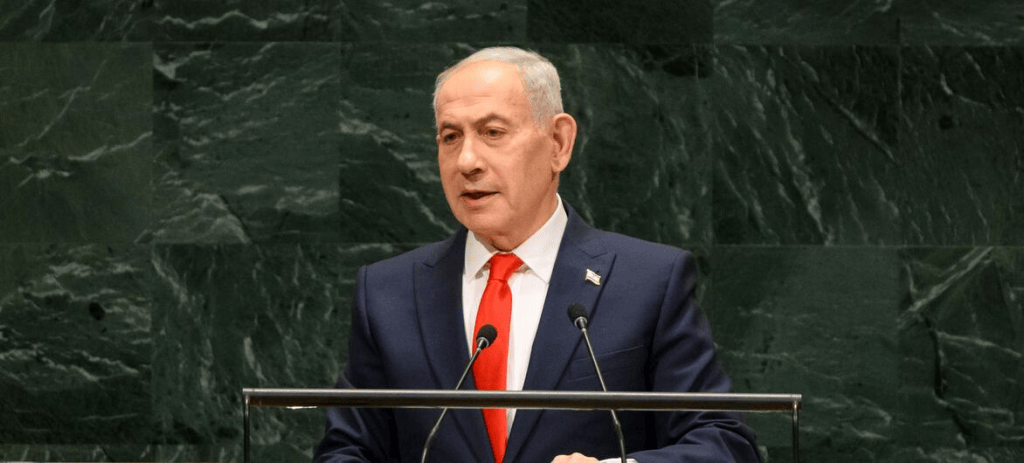
Benjamin Netanyahu, Prime Minister of Israel, delivering remarks before the United Nations on Sept. 24, 2026. Source: UN Photo/Loey Felipe
As the delegates made their way out of the hall, Netanyahu quipped: “If there are any other moral cowards who haven’t left this hall, please do so now.”
Netanyahu also directly criticized New York City Mayor Zohran Mamdani in his speech. “Mr. Mamdani, since you were elected mayor of the city, many Jews no longer feel safe in New York,” he stated. “Shame on you,” Netanyahu asserted, as he addressed Mamdani’s criticism of his government.
Previously this summer, Mamdani had explored mobilizing the NYPD to arrest Netanyahu. The International Criminal Court had issued an arrest warrant for Netanyahu in November 2024 on the basis of war crimes and crimes against humanity.
On the same day of Netanyahu’s appearance in front of the UN, roughly 100-plus pro-Palestinian protestors were arrested in Manhattan, including several politicians close to Mamdani. Among those arrested were Darializa Avila Chevalier, the Democratic nominee for New York’s 13th congressional district, and City Council members Chi Ossé and Alexa Avilés.
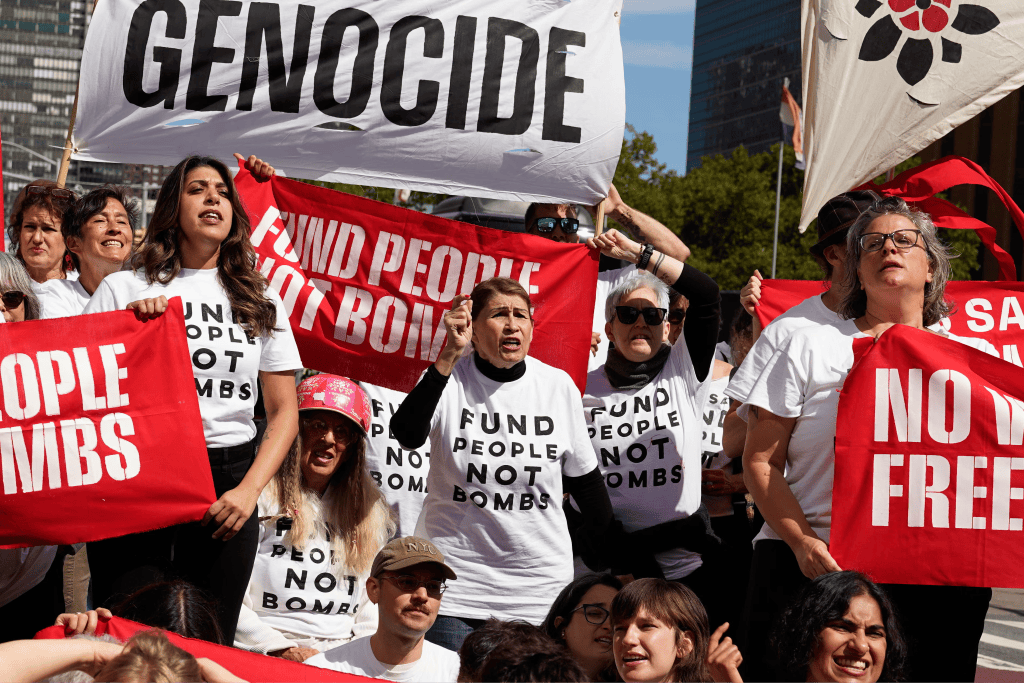
Protesters against Prime Minister Netanyahu’s appearance in front of the UN on Sept. 24, 2026, in New York City. Source: Madison Swart/AP
Ultimately, the contrasting reactions to Abbas and Netanyahu at the UN continue to showcase the deep international divide over the Israeli-Palestinian conflict. Their speeches demonstrated that, nearly three years after October 7, the conflict remains highly polarizing with little consensus in sight.

Leave a Reply