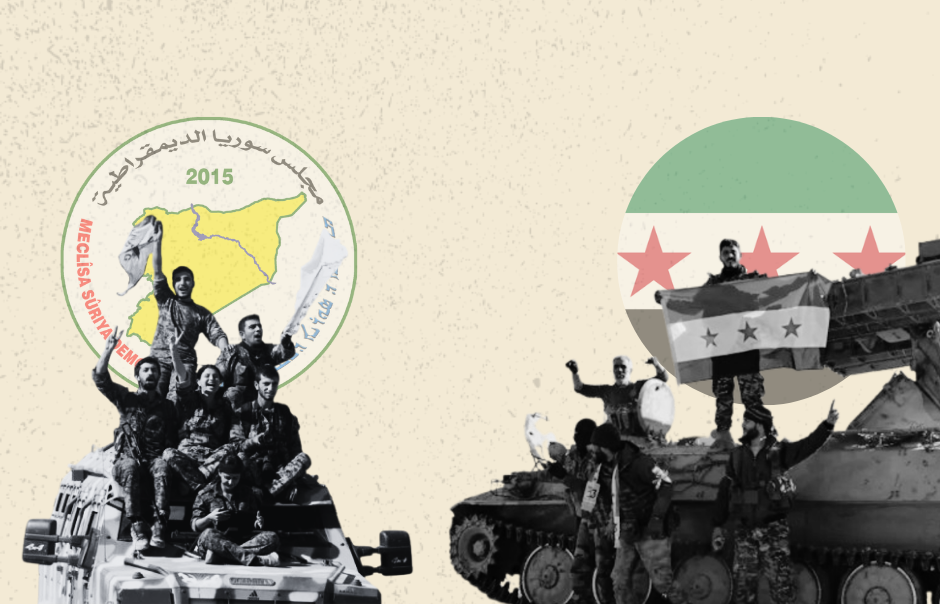
On August 25, 2026, the Syrian Democratic Forces, a Kurdish-led military force that once controlled nearly all of Syria’s northeast, announced that it officially dissolved, merging with the Syrian Armed Forces and ceasing operations as an independent force.
Most readers have likely never heard of the SDF. Often overshadowed by its counterparts further south such as the Syrian Free Army and Hay’at Tahrir al-Sham, the Syrian Democratic Forces have been sometimes seen as less relevant or important due to its Kurdish roots and smaller role in directly fighting Assad during the Syrian civil war.
However, this viewpoint fails to consider the multitude of key roles the SDF played in its nearly eleven years of existence. At its peak, the military force controlled nearly a fourth of Syria, drove back the Islamic State to only a few isolated strongholds, and was the primary partner of the United States in the region.
What Were the Syrian Democratic Forces?
The Syrian Democratic Forces, or SDF, was a multiethnic military coalition initially founded in 2015 during the Syrian civil war. Following the Syrian government’s violent suppression of pro-democracy and anti-corruption protests under dictator Bashar al-Assad, a complex conflict broke out in March 2011
Although the SDF was primarily led by Kurds, a major ethnic group in the Middle East, it was ethnically diverse and also consisting of Arabs, Turkmen, Assyrians, and Armenians. Having played an important role in defeating the Islamic State of Iraq and the Levant (ISIL), a extremist group that once controlled much of northern Syria and Iraq, the SDF took control of much of northeastern Syria, establishing the Autonomous Administration of North and East Syria.
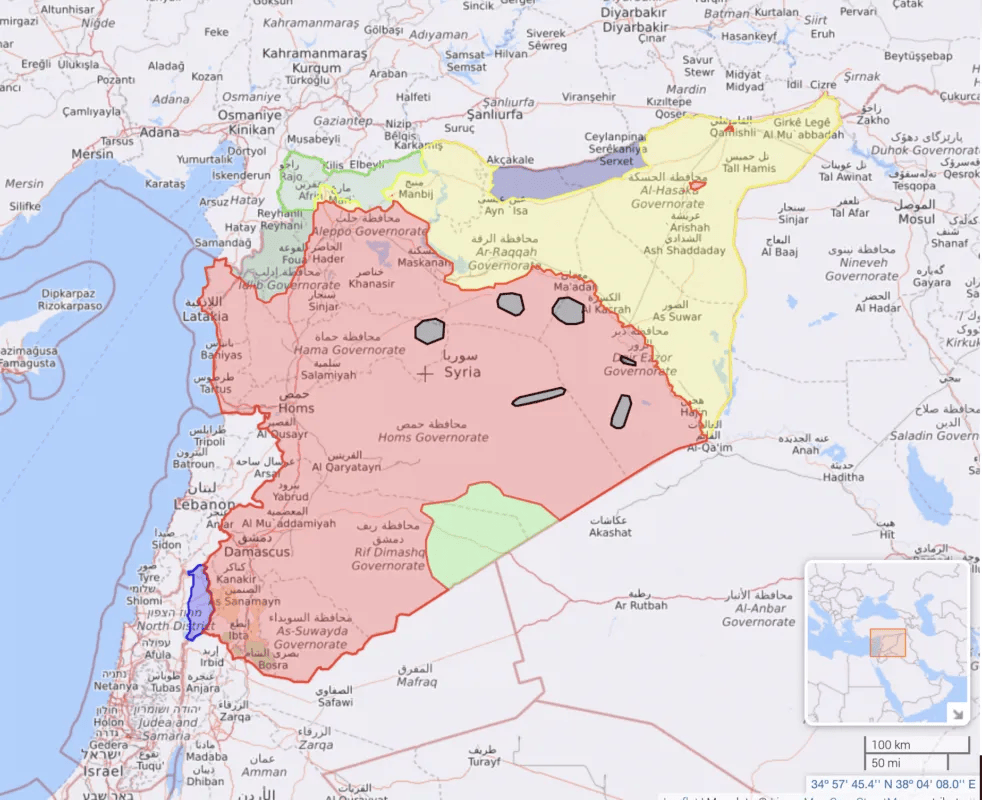
A map of Syria prior to the collapse of the Syrian government in 2024. For much of the 2010s, the SDF maintained control over the yellow territory, which locals called the “Rojava.” Source: Radical Guide
For much of its history, the Syrian Democratic Forces were controversial among its neighbors for its decentralized democratic ideology and ethnic diversity. Chief among its enemies was Turkey. Facing a decades-long conflict with Kurdish separatism and the Kurdistan Workers’ Party, Turkey consistently viewed the SDF’s Kurdish roots as hostile to its internal stability, often making military inclusions into SDF territory.
However, the Syrian Democratic Forces were successful in finding aid elsewhere. The United States, namely, was one of the SDF’s largest backers, viewing them as a critical partner against ISIL and other terrorist groups. From 2015 to 2026, the U.S. also supported and funded the group via Operation Inherent Resolve.
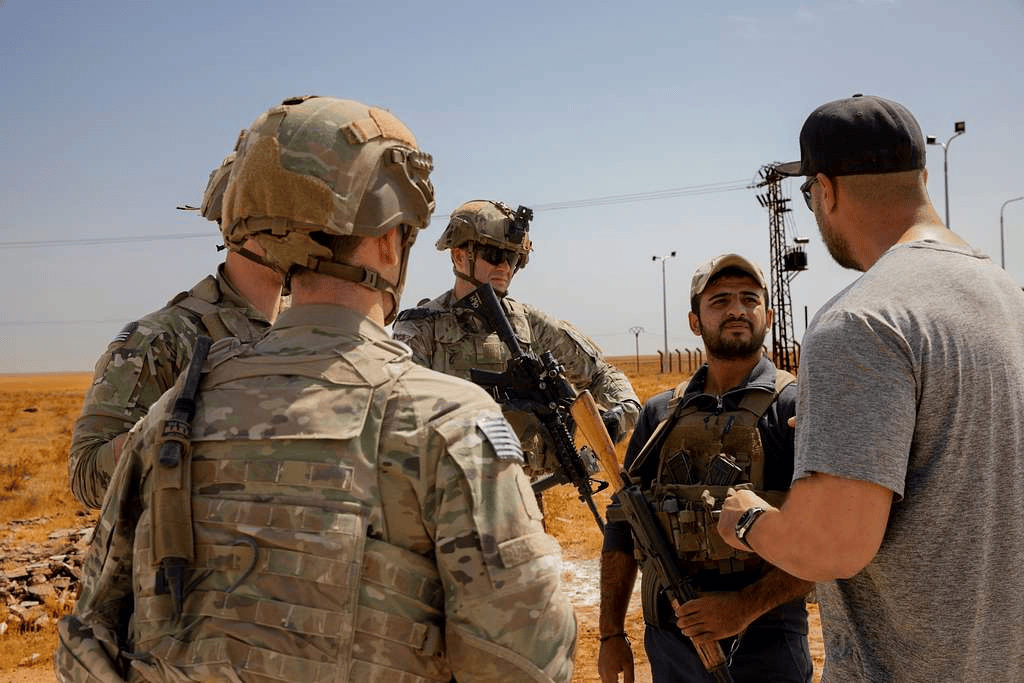
SDF soldiers meeting with the U.S. military near Hasakah, Syria. The SDF was a key U.S. ally in Syria and received significant American support in stabilizing its controlled territories. Source: NARA and DVIDS Public Domain Archives
Why did the SDF Dissolve?
The Syrian Democratic Forces dissolved largely because of sustained pressure from the Syrian transitional government, which launched a major offensive to capture SDF territory in January 2026.
Following the victory of the opposition coalition against al-Assad in late 2024, the Syrian opposition, led by Turkish-sponsored Hay’at Tahrir al-Sham, turned its attention to Rojava, one of the last areas not under opposition control. Encouraged by the general withdrawal of U.S. support from SDF forces and bolstered by Turkish aid, the transitional government made rapid gains in what was once core SDF territory, capturing most of northeastern Syria.
With holding out no longer a plausible choice, the Syrian Democratic Forces were forced to the bargaining table with the Syrian transitional government. As such, the two agreed to an integration plan, where the SDF’s military and security institutions would formally be integrated into that of the transitional government. This effectively ended the SDF, with its forces finishing integration with the newly created Syrian Armed Forces effective in late August 2026.
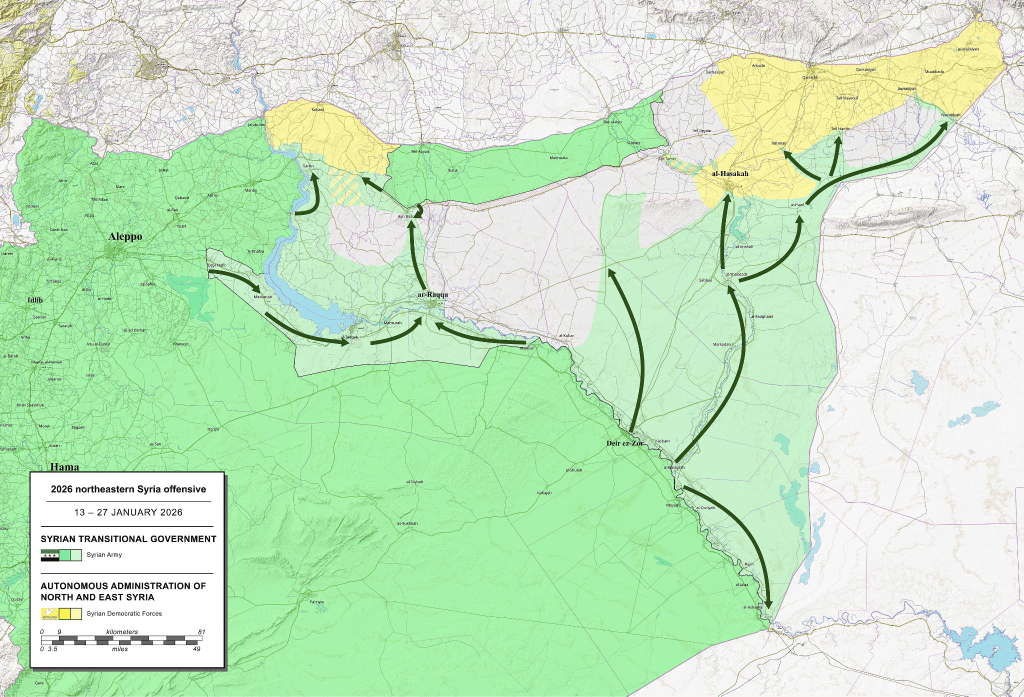
The results of the 2026 northeastern Syria offensive, which saw the Syrian Transitional Government make large gains into core SDF territory. Source: Ecrusized/Wikipedia

What Concessions Did the Syrian Government Make?
In order to secure support from the SDF and maintain stability in its administered territories, the new Syrian government was forced to make several concessions to the SDF in exchange for its formal dissolution.
Chief among them are major protections for Syrian Kurds, who were a major component of the Syrian Democratic Forces and its main ethnic group. According to the agreement, “civil and educational rights for the Kurdish people” will be included, along with “guaranteeing the return of the displaced to their areas.”

A group of Syrian Kurds associated with the SDF. Source: Arab Center Washington DC
However, some aspects of the agreement still remain to be seen and are unclear. The agreement did not include a reference, for instance, to the future of the SDF’s all-female fighting units, which goes against the conservative ideology of the transitional government, nor does it exactly reference how fighters will be integrated.
As such, only time will tell how successful exactly this agreement proves, and if the traditionally large divisions between Syria’s Arab majority and its largely Kurdish minority groups can be fully transcended with the SDF’s formal integration.
Leave a Reply