
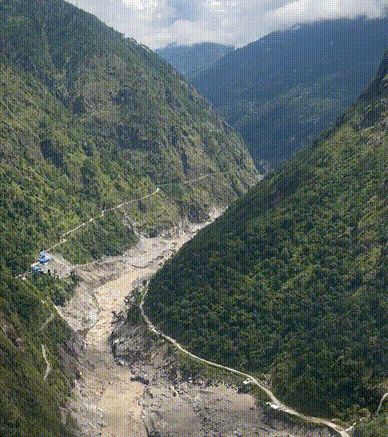
On Wednesday, August 26, a chain of devastating landslides and flash floods struck the Nepal-Tibet border region. The floods swept away homes and devastated families, leaving over one thousand dead and several thousand more unaccounted for.
As scientists investigate the cause of the flood, the preliminary conclusion is that a landslide high up in the Himalayan mountains led to a glacial collapse. Specifically, the collapse sent millions of tons of debris into the valley below, causing dams to burst and river waters to turn deadly. The New York Times compared the scale of the disaster to “[as] if 1,000 Empire State Buildings exploded at the same time and the debris coursed down a canyon.”
The rock and mud flow from the landslide raged over a course of more than forty miles, leaving destruction — broken bridges, fallen buildings, ruptured roads, and loss of life — in its path. The number of affected people numbers in the ninety thousands.
Despite the catastrophe, rescue efforts are still going strong. Nine days after the flooding occurred, two people were pulled out of a hydropower tunnel in Nepal; however, hundreds of tunnel workers still remain missing.
To carry out rescue efforts, rescuers relied on satellite imaging, blueprints of the power plant, and topographical information in order to locate the collapse. To get through to the trapped people, however, things were more complicated. They had to blast through “rocks the size of cars,” a dangerous feat given that it could have harmed the people on the other side.
Many American travelers in the area are also still missing. In the past weeks, nine or more Americans have been evacuated, but dozens remain unaccounted for. These American citizens include tourists and hikers, as well as pilgrims to the holy site of Mount Kailash. The pilgrimage to Mount Kailash, which is located in a remote part of Tibet, is considered a once-in-a-lifetime journey for several religions, including Buddhism, Hinduism, and Jainism.
The U.S. has increased its assistance to embassies in Nepal and China. For one, it has mobilized $3.6 million in emergency relief funds, which will be used to feed ten thousand affected households for up to three months.
However, many key transportation routes remain inaccessible in most areas where flooding took place. Although Kathmandu, the country’s capital and most populous city, was outside of the affected region, officials warn that monsoon-season weather conditions could exacerbate travel impediments.
Nepal’s Department of Hydrology and Meteorology continues to forecast rain across most of the country, leading to warnings from the country’s American embassy to suggest that tourists discontinue their travel plans to the region.
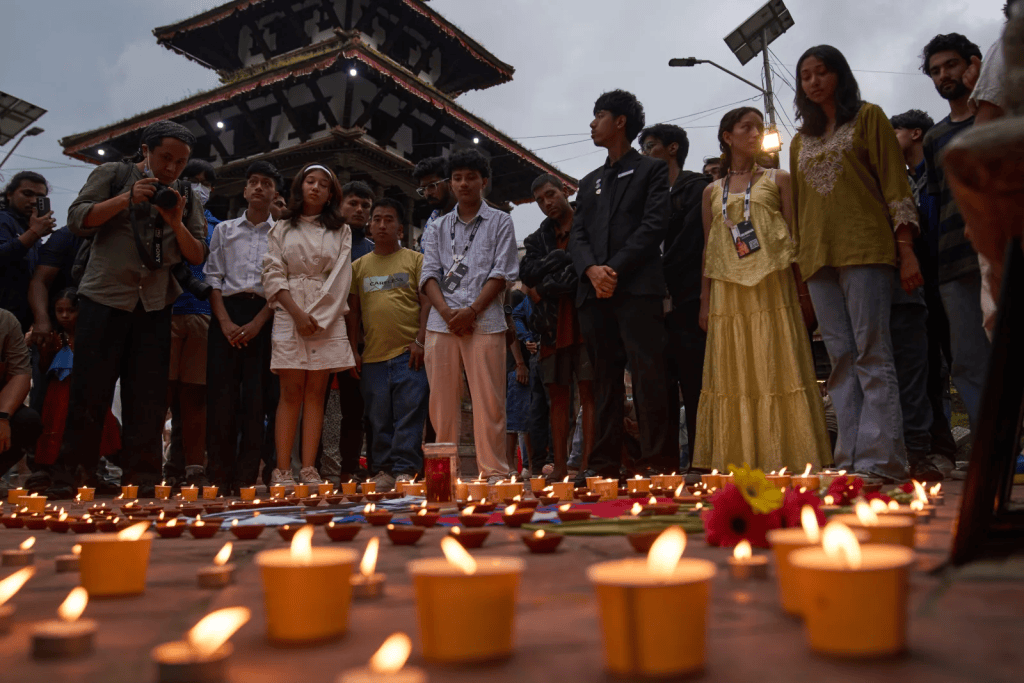
On the thirteenth day after the flooding occurred, Nepal held a day of mourning to commemorate the deceased, with flags lowered in government offices. In the predominantly Hindu country of Nepal, cremation is an important step in the funeral process; however, without even the bodies of their loved ones, families are denied spiritual release.
Relatives of those missing held demonstrations outside key governmental offices in Kathmandu to demand increased investment in search efforts for the missing — in particular, the hundreds of workers at hydropower plants along the flooded rivers.
Rescue efforts, including the one that recently successfully rescued two workers from a tunnel, have indeed focused on the hydropower plants, where nearly one thousand workers are missing and an estimated five hundred are trapped in various tunnels. Aside from Nepalese rescuers, China, India, South Korea, and the United States have sent specialized teams to search through the area, as well.
On the Chinese side of the border, much less information has been released. After the floods, Beijing launched a “massive rescue operation,” according to BBC News, which is still ongoing. However, many sensational videos of the rampaging floods and people fleeing for their lives are conspicuously absent in the Chinese social media sphere.
Official sources from Beijing have released daily updates about rescue efforts, but there are no accounts from survivors in Tibet — a region that is politically sensitive in China due to its history of resisting the rule of the Chinese Communist Party — and very little footage other than that which the government has provided.
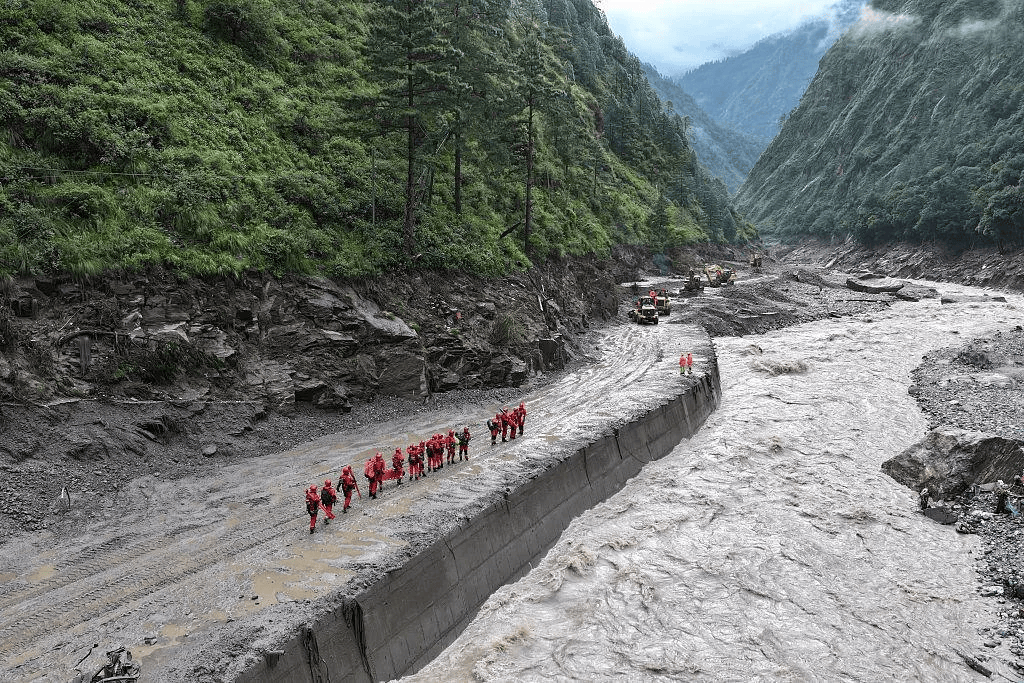
Family members of those missing in Tibet have expressed frustration over what they perceive as withholding of information about those unaccounted for from the Chinese government, whereas China claims it has been “transparent and timely.”
As rescue efforts continue, many continue to pray for the safety of their acquaintances, friends, or relatives who may be trapped in the areas transformed by the floods. The Chinese and Nepalese governments must also begin considering reconstruction efforts and prevention efforts for future natural disasters.
Leave a Reply