
Nauru, a small island in the remote South Pacific, is the world’s third smallest country. It has a population of just 12,000—less than half the population of Greenwich Village in New York City. Colonized by Germany and then administered by Australia, the nation gained independence in 1968, with “phosphate mining creating huge wealth on the island in the 1970s before the industry collapsed.” Now, it is one of the world’s most at-risk areas for rising sea levels, spurred by the ongoing climate crisis.

Republic of Naoero, formerly known as Nauru, flying its flags. Source.
In May of 2026, Nauru’s parliament “passed a constitutional amendment in May to change the name,” rather than seek a national referendum on the matter. President David Adeang shared via social media that this decision was because the new name “is already the identity of the people, is on the national coat of arms, and spoken in the community; and importantly is allowed by the constitution.”
So what is the new name of this tiny nation? Nauru has officially changed its name to the Republic of Naoero, “reverting to its traditional designation in a move it said was aimed at strengthening national identity and cultural heritage.” The shortened name is Naoero, and citizens of the country are referred to as “dei-Naoero.” The name was originally changed to Nauru after European colonizers found the native name too hard to pronounce.
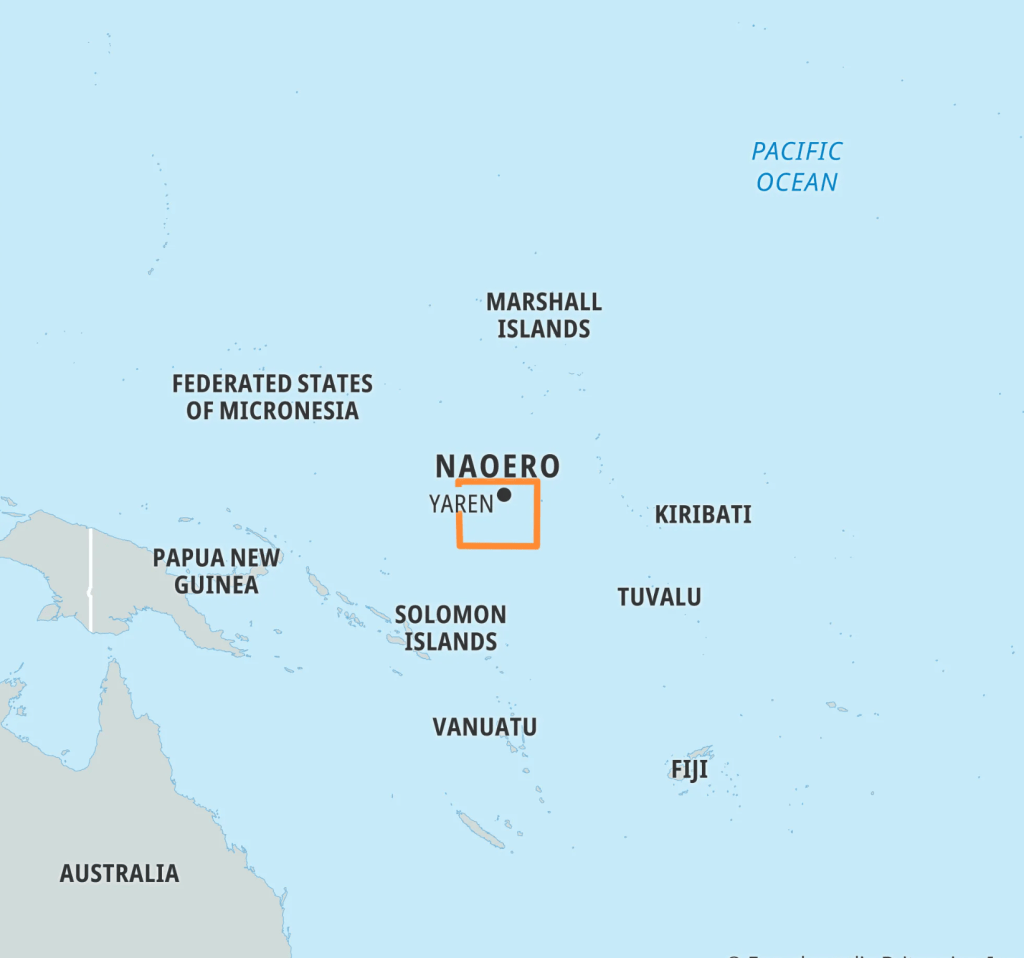
A map of Naoero, formerly Nauru. Source.
The new name of the country is pronounced “Now-ero,” matching the spelling and pronunciation in its native language. Nauruan is an Oceanic language spoken natively by over 6,000 people (half of the population of Naoero), and 96% of the country’s population speaks it. Since Nauruan is rarely spoken outside the island, most citizens also speak English, which is the other official language.
Naoero is the latest of a few countries to change its name, shifting away from a colonial past. In 2018, the African nation of Eswatini changed its name from Swaziland, and in 2022, Turkey changed its name to Türkiye.
Naoero’s name change is much more than just a political decision. It represents a long-awaited return to the country’s cultural roots and an effort to reclaim an identity that predates European colonization. As a nation confronts an uncertain future, Naoero is looking to its past to define what comes next.

Leave a Reply