Introduction
The state of Michigan has a habit of defying expectations and sending outsiders, no matter Republican or Democrat, to the highest rungs of elected office.
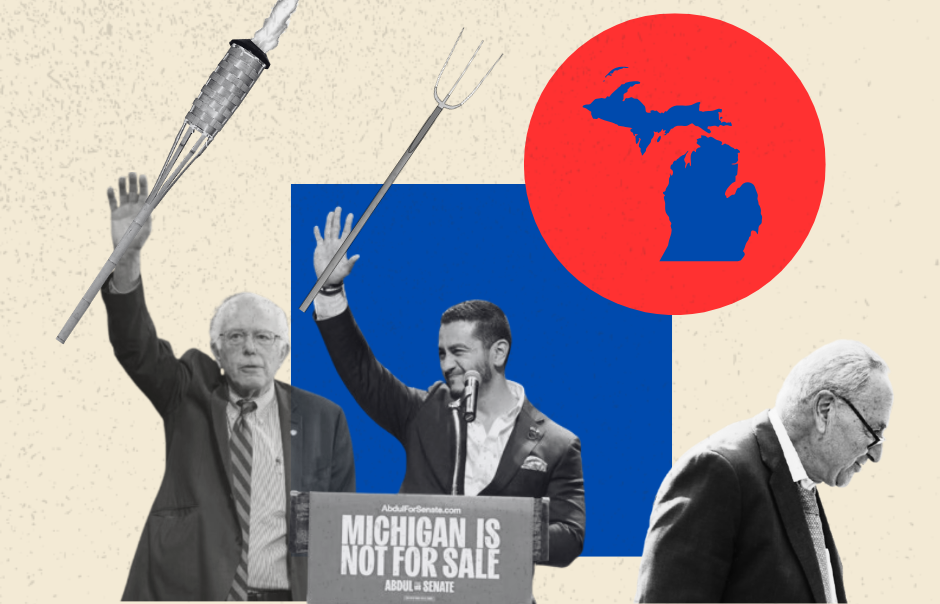
Just 10 years ago, Michigan shocked all analysts in the Democratic presidential primaries when Bernie Sanders outperformed the polls by over 22 points to win a majority of the state’s delegates. Then, that November, Trump, considered trailing badly to Hilary Clinton, won the “blue wall” state, decisively propelling him to the White House. Years later, it was El-Sayed’s turn to defy expectations, this time in the Democratic primary for U.S. Senate, where he defeated Representative Haley Stevens by 0.97%.
Abdul El-Sayed’s victory is another shock in a string of surprises for one of the most fascinating swing states in America. But it does raise quite a few questions in one’s head – why is Michigan so prone to supporting “outsider” candidates who fervently criticize the establishment? How did El-Sayed pull off his nail-biter victory against established candidates like Haley Stevens? And what does all of this mean for the state’s elections in November?
From Factories to Rust
The true explanation lies not in the state’s government offices and political party headquarters, but rather in its factories and machinery.
For much of the state’s history, Michigan served as the global epicenter of manufacturing, especially for automobiles. Encouraged by good geography, access to natural resources, and early industrialization, American megacorporations, including the Big Three auto companies: General Motors, Ford Motor Company, and Stellantis, made Michigan their home, investing in hundreds of factories and car plants. By 1920, the state’s largest city, Detroit, had already skyrocketed to become the fourth-largest city in the United States, with a booming population, vibrant city center, and sprawling suburbs.
Corner of Michigan Avenue and Griswold Street, circa 1920. Source: Detroit Public Library
This prosperity also gave birth to an unspoken but powerful social contract between Michiganders and the political establishment – with hard work and trust in the government, the average Michiganer would be practically guaranteed a good job, large house, and comfortable retirement. Since the system successfully delivered prosperity and a growing middle class, voters placed immense faith in traditional institutions like state government to continue serving at the top, resulting in the continuous re-election of politicians like Governor G. Mennen Williams, who was re-elected an unprecedented six times.
However, the very trust Michiganders placed in the hands of the government and automobile companies that kept Michigan going would come crashing down in the 1970s. With an oil crisis caused by instability in the Middle East and a resurgent Japan producing cheaper, more fuel-efficient cars, the Big Three companies could no longer afford to keep their assembly lines running the way they had for decades. This created an economic catastrophe for Michigan as the very factories that kept it going ground to a halt.
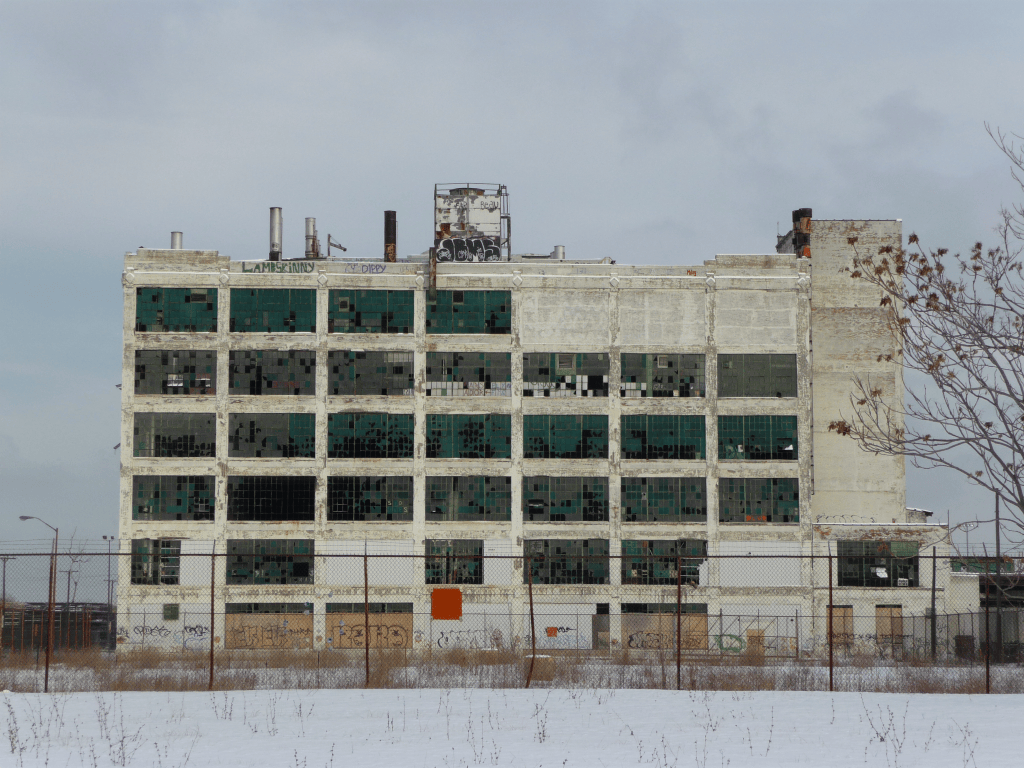
An abandoned Fisher auto plant in Detroit. Source: Patrickklida (Wikimedia).
With plant closures left and right, a loss of 50,000 manufacturing jobs between 1970 and 1977 alone, and a growing suburban exodus from Detroit, Michiganders felt abandoned and betrayed by the very politicians they had put their faith in just years ago. This reckoning propelled the state’s “outsider politics,” resulting in a growing share of voters willing to consider alternatives who claimed they could re-shape the system.
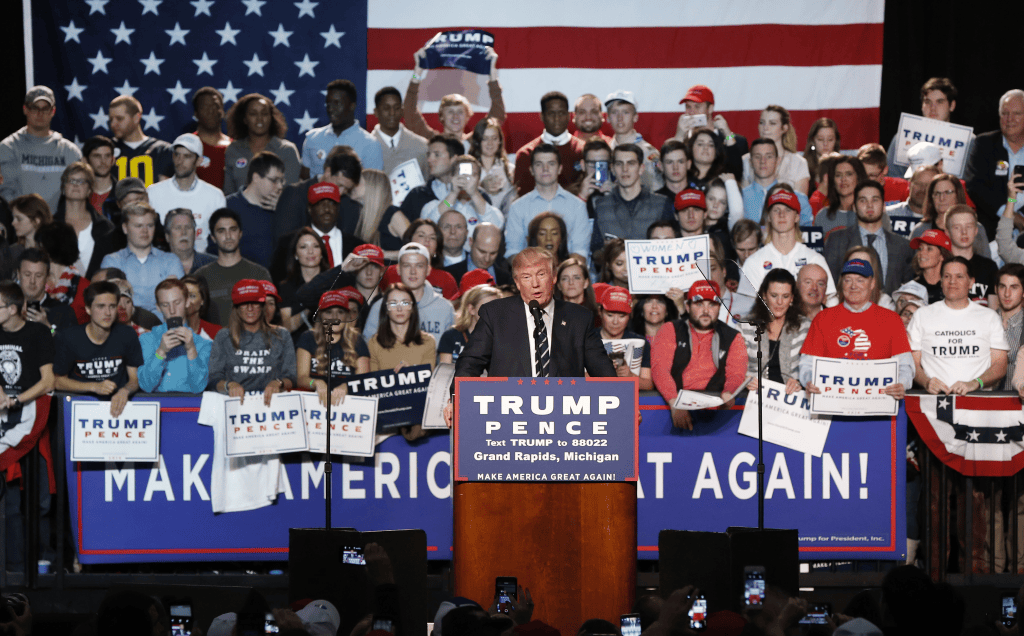
As such, the seeds were sown for the state’s willingness to propel underdogs to victory and economic populism, a political culture that would propel right-wing populist Donald Trump to victory over Hilary Clinton in 2016.
President Donald Trump campaigning in Grand Rapids, Michigan in 2016. Trump’s focus on economic populism and bringing jobs back to the Midwest resonated with many dissatisfied blue-collar voters, propelling him to a narrow, 0.23% victory in the presidential election. Source: CTPublic
El-Sayed’s Miraculous Rise to Stardom
Ten years later, it was time for the rise of another underdog. With the retirement of incumbent senator Gary Peters, former Wayne County health director Abdul El-Sayed declared that he would run for Michigan’s U.S. Senate seat on April 19, 2025. This followed Michigan state senator Mallory McMorrow’s announcement 17 days earlier, and would precede representative Haley Stevens’ announcement by two days.
In comparison to McMorrow and Stevens, El-Sayed ran a distinctively progressive campaign, representing the insurgent progressive wing of the Democratic Party. His main platform centered around three goals: “money out of politics, money in your pocket, and Medicare for All,” a set of policies not unlike the insurgent Bernie Sanders’ positions ten years.
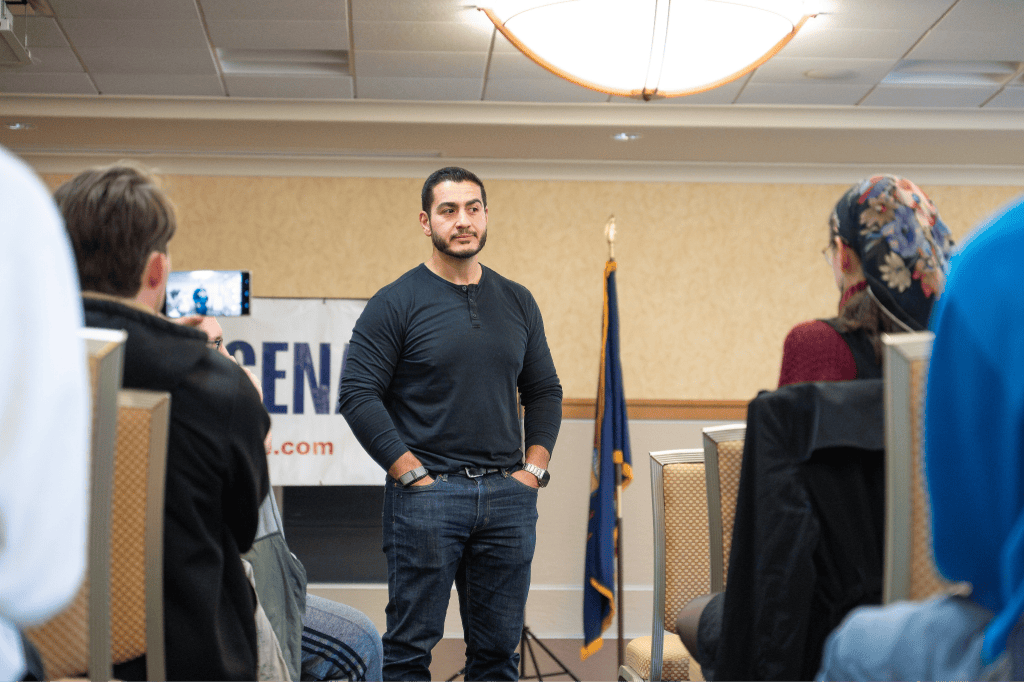
Abdul El-Sayed campaigning in Michigan. Source: Conlan Houston (Wikipedia)
Although El-Sayed initially trailed in most early polls to Stevens, who is considered the more moderate candidate in the race, his momentum quickly accelerated following the departure of McMorrow from the race, with most polls showing El-Sayed and Stevens neck-and-neck.
With the primary election turning into a competition between El-Sayed and Stevens, the primary season quickly devolved into a heated proxy fight between the progressive and moderate wing of the Democratic Party. El-Sayed criticized Stevens for her connections with large political PACs such as the American Israel Public Affairs Committee, calling her a “suit with a large AIPAC bank account.” Meanwhile, Stevens fired back, calling him “part of the complainer class” who blamed all his problems “on Jewish Americans.” Stevens also raised concerns about El-Sayed’s electability, who lost his 2018 run for Governor of Michigan, and emphasized her experience connecting to swing voters and moderates in Congress.
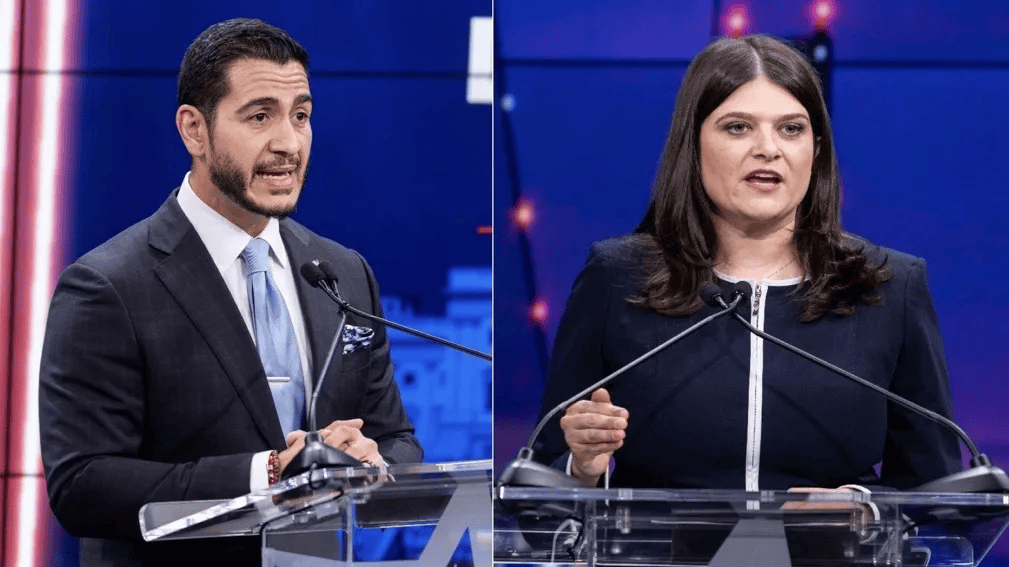
El-Sayed and Stevens at the Michigan Senate debate. Both El-Sayed and Stevens traded blows about the other’s personal character throughout the campaign, with El-Sayed attacking Stevens’ connection to PACs while Stevens called El-Sayed unelectable. Source: The Detroit News
Ultimately, however, El-Sayed surpassed Stevens in polling averages, winning the Democratic primary by around one point. Shortly after El-Sayed’s victory, Stevens and other Michigan Democrats endorsed him, citing the need for unity in the party against Republican nominee Mike Rogers.
The Outsider Versus the Career Conservative
Now, El-Sayed faces off against Republican nominee Mike Rogers, who was also the nominee in the 2024 Senate election in Michigan. With most polls showing a heated race, it remains to be seen if El-Sayed can repeat his strong performance in the primaries and appeal to the broader electorate in Michigan, a state that remains closely contested between Democrats and Republicans.
Nonetheless, this election is but a reminder of Michigan’s unique political culture and how far candidates once considered “dark horse” candidates have come in the Wolverine State. Should El-Sayed win, perhaps Michigan will reaffirm its status as a state that rewards opposition to the status quo, determination, and sheer tenacity.


Leave a Reply